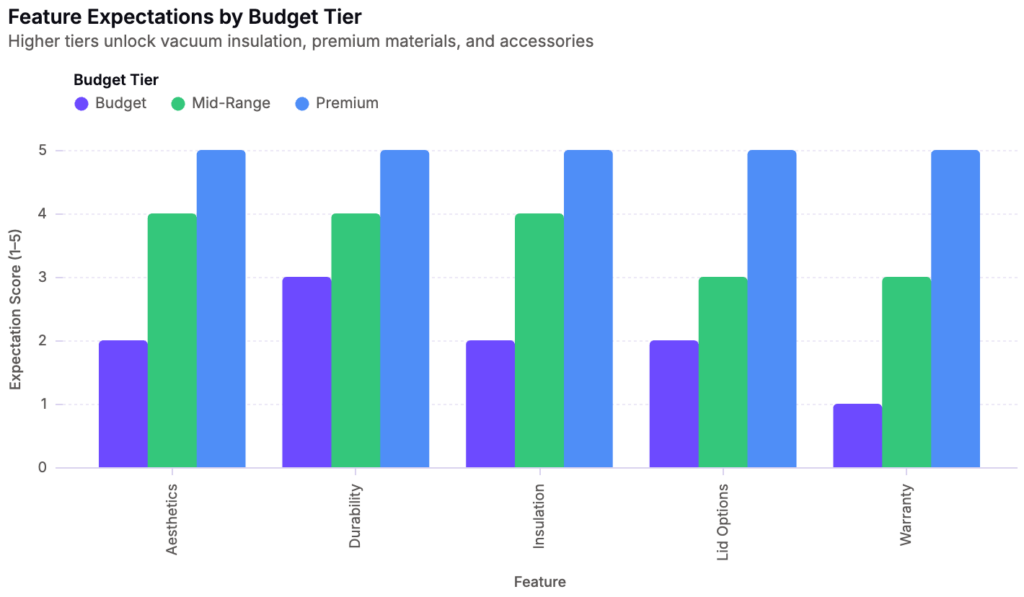
Plastic bottles pile up in landfills by the billion. The fix? One bottle you actually want to carry everywhere. Enter the Takeya Actives — a vacuum-insulated stainless steel workhorse that checks every box at a mid-range budget tier.
Why It Wins
Ergonomic carry handle rotated 90 degrees, walking with your hand naturally — no pressure points, no sharp edges
Smooth flip spout opens quickly and delivers a clean, spill-free sip every time
Protective spout cover keeps things sanitary and leak-proof when closed
Double-wall insulation holds ice for hours in summer heat
Wide mouth makes cleaning effortless; dishwasher-safe components simplify maintenance
Durable, sleek finish that looks as good as it performs
The Bottom Line
Finding a bottle that’s genuinely easy to hold, drink from, carry, and clean is harder than it sounds. The Takeya Actives nails all four — making it the perfect everyday alternative to single-use plastics.
Every single day, millions of people reach for a disposable drink bottle — grab a coffee cup, pick up a bottled water, swing through a drive-through for a soda in a plastic cup with a straw. Convenience feels effortless. But that convenience comes with a staggering environmental cost that piles up faster than any of us care to admit.
This guide is designed to walk you through everything you need to know about switching from single-use drink containers to reusable tumblers and water bottles. Whether you’re motivated by sustainability, saving money long-term, keeping your drinks at the perfect temperature, or simply expressing your personal style, we’ll help you find the right reusable vessel for your lifestyle.
The Problem: Disposable Drink Waste Is Staggering
Let’s start with some perspective. Globally, humans purchase approximately one million plastic bottles per minute. Of those, only a fraction — some estimates suggest around 9% — actually get recycled. The rest end up in landfills, oceans, waterways, and scattered across landscapes where they take hundreds of years to decompose.
But here’s what most people miss: even when a plastic bottle does make it into the recycling stream, the cap often doesn’t. Bottle caps are made from a different type of plastic than the bottle itself (typically HDPE vs. PET), which means many municipal recycling facilities either can’t process them or won’t bother separating them. Millions of caps are landfilled or become ocean debris every year.
And then there are straws. Plastic drinking straws are virtually never recycled — they’re too lightweight to be captured by standard sorting machinery, and they’re too small to be economically viable for recyclers. They consistently rank among the top ten items found during beach cleanups worldwide. While paper straws have gained popularity as an alternative, many users find them frustratingly soggy and short-lived, which brings us back to the core issue: people just want a good drinking experience.
The bottom line? Even “recyclable” disposable options are far from a real solution. The only genuinely sustainable approach is reuse — and that’s where tumblers and water bottles come in.
Why Reusable Tumblers & Water Bottles Are the Answer
Switching to a reusable tumbler or water bottle addresses the waste problem directly. Instead of contributing to the mountain of single-use plastics, you invest in a durable container that can last for years — sometimes decades — with proper care. Over its lifetime, a single reusable bottle can replace thousands of disposable ones.
But sustainability isn’t the only benefit. Here are several reasons why making the switch improves your everyday experience:
Superior Temperature Retention: Most quality reusable bottles and tumblers feature double-wall vacuum insulation. This technology creates an airless gap between two stainless steel walls, dramatically reducing heat transfer. Cold drinks stay icy for up to 24 hours or more. Hot beverages like coffee or tea remain piping hot for 6–12 hours. Compare that to a flimsy plastic bottle or paper coffee cup that lets your drink go lukewarm within the hour.
Personal Expression: Unlike a generic disposable bottle, a reusable tumbler or water bottle becomes an extension of your personality. Brands offer a dizzying array of colors — from muted earth tones to vibrant metallic finishes. Patterns range from minimalist geometric designs to bold florals and everything in between. And then there’s the sticker culture: many enthusiasts adorn their Yeti, Hydro Flask, or Stanley tumblers with custom stickers showcasing their hobbies, travels, favorite bands, or sense of humor. Your drink container becomes a canvas.
Functional Variety: Reusable vessels come in configurations that disposables simply can’t match. Want a built-in straw for easy sipping on the go? There’s a tumbler for that. Need a sturdy handle for carrying your giant hydration companion everywhere? Several brands have you covered. Prefer a flip-top lid, a screw cap, a chug spout, or a wide-mouth opening for ice? The options are nearly endless, and many brands offer interchangeable lids so you can customize your setup.
Cost Savings Over Time: While the upfront investment is higher than a single disposable bottle, the math quickly tips in favor of reuse. If you’re someone who buys bottled water, specialty coffees, or fountain drinks regularly, a reusable container pays for itself in a matter of weeks to months.
Types of Reusable Drink Containers Explained
Before diving into features and recommendations, let’s clarify the terminology, since “tumbler” and “water bottle” are sometimes used interchangeably but actually refer to different form factors.
Water Bottles
Water bottles are designed primarily for portability and active use. They typically feature a narrower profile, a secure sealing lid (screw cap, flip-top, or chug spout), and are built to be tossed in a backpack, gym bag, or cup holder. They tend to hold anywhere from 12 to 40 ounces and prioritize leak-proof designs over open-drinking convenience.
Best for: Gym-goers, hikers, students, commuters, and anyone who needs a sealed, spill-proof container for on-the-go hydration.
Tumblers
Tumblers are broader, often wider vessels that prioritize drinking comfort over absolute portability. They typically feature a straw lid or a press-in slider lid, and their wider base makes them ideal for desk use, car cup holders (in many cases), and leisurely sipping. Tumblers commonly range from 20 to 40+ ounces and often include a handle for easier carrying.
Best for: Office workers, road-trippers, desk sippers, iced coffee lovers, and anyone who prefers straw-based drinking.
Hybrid/Multi-Use Vessels
Some modern designs blur the line — offering both a carry handle and a straw, or coming with multiple interchangeable lid types. These versatile options are ideal for people who want one container that adapts to multiple situations throughout the day.
Best for: People who want maximum versatility from a single purchase.
Key Features to Consider When Choosing
With the basics covered, let’s dig into the specific features that differentiate products within each category. Understanding these will help you match a product to your specific needs.
Insulation Technology
The vast majority of premium reusable drinkware uses double-wall vacuum insulation. Two layers of stainless steel are joined with a vacuum-sealed gap between them. Because there’s no air (and therefore no medium for heat transfer), this design is remarkably effective at maintaining temperature.
Lower-cost options may use double-wall construction without a true vacuum, or even single-wall designs. These offer some insulation benefit but fall significantly short of vacuum-insulated performance. If temperature retention is a priority — especially for hot drinks or all-day ice retention — vacuum insulation is essential.
Some ultra-budget options use plastic double-wall construction. These are lightweight and inexpensive but don’t insulate as effectively and may retain odors or flavors over time.
Lid Types
The lid is arguably the most important functional component of any reusable vessel. Common lid styles include:
Straw Lids: Feature a hole for a reusable straw. Excellent for cold drinks and easy sipping while driving or working. Look for models with a sliding cover or flip closure to keep the straw clean when not in use.
Chug Spouts: A raised, angled spout designed for taking large gulps quickly. Popular among athletes and outdoor enthusiasts.
Screw Caps: The classic, most leak-proof option. Great for tossing in a bag without worry, though less convenient for quick sips.
Flip-Top/Press-Button Lids: One-handed operation with a spring-loaded mechanism. Convenient but more complex, meaning more parts to clean and a higher likelihood of mechanical failure over time.
Slider Lids: A lever that slides open to reveal a drinking opening. Common on coffee tumblers and travel mugs.
Material Quality
18/8 Stainless Steel: The gold standard for reusable drinkware. It’s food-safe, resistant to corrosion, doesn’t impart flavors, and is highly durable. All premium brands use this material.
Tritan Plastic (BPA-Free): A shatter-resistant, clear plastic used in many lower-cost bottles. Lighter than steel and allows you to see contents, but doesn’t insulate as well and may scratch over time.
Glass: Offers the purest taste — no flavor retention whatsoever — but is heavy, fragile, and generally impractical for portable use. Some brands offer silicone sleeves for protection.
Silicone/Collapsible: Ideal for travel and space-saving. These can be rolled or folded when empty. Trade-offs include less insulation and a somewhat floppy drinking experience.
Size and Capacity
Capacity Range
Best Use Case
Portability
12–18 oz
Desk use, kids, short outings
Very portable, fits all cup holders
20–30 oz
Daily driver, commuting, gym
Portable, most cup-holder friendly
32–40 oz
All-day hydration, outdoor activities
Less portable, may not fit all cup holders
40+ oz
Serious hydration goals, office desk
Bulky; often includes a handle for carrying
Handle Options
Handles have become increasingly popular, especially on larger-capacity tumblers. A well-designed handle makes carrying a 40-ounce vessel comfortable and natural. Look for handles that are integrated into the lid (allowing 360-degree rotation) or molded into the tumbler body for structural durability.
Straw Considerations
If you opt for a straw-equipped vessel, consider the straw material:
Reusable Plastic Straws: Lightweight, clear, and affordable. Found in most tumbler kits. May scratch over time.
Stainless Steel Straws: Extremely durable and easy to clean, but conduct temperature — beware of very cold or very hot drinks. Often come with silicone tips for comfort.
Silicone Straws: Soft, flexible, and kid-friendly. Won’t conduct temperature. May retain some flavors over time.
Regardless of material, always use a straw cleaning brush — straws are notorious breeding grounds for bacteria if not properly maintained.
Budget Tier Comparison
Rather than citing specific prices (which fluctuate constantly due to sales, availability, and retailer pricing), here’s a breakdown of what you can expect at each budget tier. All Amazon product links are affiliate links, meaning we may earn a commission at no additional cost to you.
Budget Tier ($)
At this tier, you’ll find single-wall or basic double-wall stainless steel bottles, Tritan plastic tumblers, and simpler designs. Expect minimal accessories, fewer color options, and basic lids (often just a screw cap or simple straw lid). Insulation performance will be modest — cold drinks may stay cool for a few hours, but don’t expect ice to last overnight. Warranty coverage is typically limited or nonexistent.
Who it’s for: First-time buyers, casual users, kids, or anyone testing the waters of reusable drinkware without committing significant funds. Also great for bulk purchases (office teams, event giveaways).
This is where vacuum insulation becomes standard. You’ll find 18/8 stainless steel construction, double-wall vacuum insulation with respectable temperature retention (cold for 12–18 hours, hot for 6–8 hours), and a decent selection of colors and finishes. Lid options expand — many brands at this tier offer straw lids, chug spouts, and slider lids. Warranties are typically 1–5 years.
Who it’s for: Most everyday users. This tier hits the sweet spot of performance, durability, and value. If you’re replacing daily disposable drinks and want something that genuinely outperforms them, this is your starting point.
Premium-tier drinkware represents the best of the best. Expect top-tier vacuum insulation (cold retention up to 24+ hours, hot up to 12+ hours), extensive color and finish palettes including powder-coated and metallic options, modular accessory ecosystems (interchangeable lids, handles, boot protectors, straw packs), and robust warranties — often lifetime or “limited lifetime.” Build quality and attention to detail are noticeably superior, and brand communities offer sticker swaps, customization guides, and social sharing.
Who it’s for: Daily heavy users, outdoor enthusiasts, gifting, brand loyalists, and anyone who wants a “forever bottle” that performs flawlessly for years.
Not sure which form factor suits you? This chart breaks down the key differences:
The Maintenance Catch: What Nobody Tells You
Here’s the honest truth that many buying guides gloss over: reusable drink containers require ongoing maintenance, and neglecting it can create health concerns that single-use bottles never pose.
Why Cleaning Matters
Every time you drink from a tumbler or bottle, you introduce saliva, food particles, and potentially sugary residues into the vessel. Over time, this creates an environment where bacteria, mold, and mildew can flourish — particularly in damp, dark, and warm conditions (which describes the interior of a sealed bottle perfectly). Studies have found that unwashed reusable bottles can harbor significantly more bacteria than a toilet seat.
The Problem Areas
Straws: The inside of a straw is the single hardest component to clean properly. A quick rinse is not enough — you need a dedicated straw brush to scrub the full interior length.
Lid Mechanisms: Flip-top lids, slider mechanisms, and press-button releases have small crevices and moving parts where gunk accumulates. Many premium lids can be disassembled for cleaning, but you need to do so regularly.
Thread Seals: The threading where the lid screws onto the bottle collects residue. An old toothbrush works wonders here.
Bottom Seams: Many tumblers have a slight ridge or seam at the bottom interior where liquid pools. Pay special attention to this area during washing.
Gaskets/O-Rings: Silicone gaskets that create the leak-proof seal are prime real estate for mold growth. Remove them periodically and soak in warm, soapy water or a diluted vinegar solution.
Recommended Cleaning Routine
Daily: Rinse thoroughly with warm water after each use. At minimum, wash with warm soapy water and a bottle brush every evening.
Weekly Deep Clean: Disassemble all removable components (lids, straws, gaskets, sliders). Soak in warm water with dish soap or a mixture of water and white vinegar. Scrub all surfaces with appropriate brushes. Allow all parts to air-dry fully — moisture is the enemy.
Monthly Sterilization: Run dishwasher-safe components through a heated dishwasher cycle. For hand-wash-only items, a soak in a diluted bleach solution (1 teaspoon per quart of water) followed by thorough rinsing provides sterilization. Alternatively, bottle-cleaning tablets (widely available) offer a fizz-action deep clean that reaches areas brushes can’t.
Drying Is Non-Negotiable
Even the cleanest bottle will develop odors and bacterial growth if stored damp. Always store your vessel with the lid off and allow full air circulation. Store upside down on a drying rack when possible. Never store a sealed, damp bottle — you’re essentially creating a terrarium for microbes.
Additional Considerations
Dishwasher Safety
Not all premium drinkware is dishwasher safe. Powder-coated finishes can degrade over time in high-heat dishwasher cycles. Vacuum seals can theoretically be compromised by extreme temperatures (though modern manufacturing has largely mitigated this). Always check the manufacturer’s recommendations. If dishwasher cleaning is important to you, filter for “dishwasher safe” explicitly.
Cup Holder Compatibility
If you spend significant time driving, cup holder compatibility is a practical consideration. Most bottles up to ~3 inches in diameter fit standard car cup holders. Large-capacity tumblers (40 oz+) often exceed this and may require a vehicle with oversized cup holders or an aftermarket adapter. Handles that rotate 360 degrees can help navigate tight cup holder spaces.
Sustainability of the Container Itself
It’s worth noting that producing a stainless steel water bottle requires significantly more energy and resources than producing a single plastic bottle. Various lifecycle analyses suggest that a reusable bottle needs to replace somewhere between 10 and 80 disposable bottles (depending on the study and assumptions) to “break even” environmentally. Given that a quality reusable vessel replaces thousands of disposables over its lifespan, this threshold is easily cleared — but it underscores the importance of actually reusing your reusable. Buying five different “reusable” bottles that each sit unused in a cabinet is not an environmental win.
Sticker Culture and Customization
One of the most delightful aspects of the reusable tumbler movement is the sticker culture. Vinyl, waterproof, and dishwasher-safe stickers let you transform a plain vessel into a deeply personal statement piece. Travel stickers, band logos, funny quotes, nature illustrations, anime characters — if you can imagine it, there’s a sticker for it. Some enthusiasts curate their tumblers seasonally, swapping sticker collections throughout the year. Just be aware that applying stickers over powder-coated finishes is fine, but removing them may leave adhesive residue that requires careful cleaning.
How long do insulated tumblers and water bottles typically last?
With proper care, a high-quality stainless steel vacuum-insulated bottle or tumbler can last for many years — sometimes 5 to 10+ years. The vacuum seal is the most vulnerable component; if the bottle is dropped hard enough to dent the inner wall, the vacuum can be lost, and insulation performance will drop. The exterior finish (especially powder coating) may show wear over time, but this is cosmetic rather than functional.
Can I put hot drinks in a tumbler designed for cold drinks?
In most cases, yes — the vacuum insulation works for both hot and cold. However, lids matter. A straw lid with a straw inserted is not suitable for hot liquids, as the straw can become dangerously hot and cause burns. Switch to a slider or sip lid for hot beverages. Some straws (particularly metal ones) conduct heat efficiently and can deliver scalding liquid directly to your lips.
Are stainless steel bottles safe for acidic drinks?
Yes. 18/8 stainless steel is highly resistant to corrosion from acidic beverages like lemon water, sports drinks, or fruit-infused water. However, prolonged storage (multiple days) of highly acidic drinks is not recommended as it can eventually affect the taste. Stick to daily use and regular cleaning.
Will my bottle sweat with cold drinks?
Vacuum-insulated stainless steel bottles should not sweat externally — that’s one of their key advantages. If you notice condensation forming on the outside, it likely means the vacuum seal has been compromised (possibly from a drop or dent). Single-wall bottles and some lower-quality double-wall bottles will sweat.
How do I remove stubborn odors from my tumbler?
Try one of these methods:
Baking soda paste: Mix baking soda with water to form a paste. Apply to the interior, let sit for several hours, then scrub and rinse.
Vinegar soak: Fill with equal parts white vinegar and water. Let sit overnight, then wash thoroughly.
Denture tablets: Drop a denture-cleaning tablet in with warm water. Let fizz for 15–20 minutes, then wash.
Bottle cleaning tablets: Commercial products designed specifically for this purpose are highly effective and convenient.
Is it safe to put my tumbler in the freezer?
Generally, no. Freezing a vacuum-insulated bottle can damage the vacuum seal due to liquid expansion. If you want colder drinks, add ice cubes to your beverage instead. Some manufacturers explicitly state that freezer use voids the warranty.
What size tumbler fits in a standard car cup holder?
Most standard car cup holders accommodate containers up to approximately 3 inches in diameter. A 20-ounce tumbler typically fits comfortably. Larger 30-40 ounce tumblers may fit depending on the vehicle, but many require oversized holders or adapters. If this is a primary concern, check dimensions before purchasing.
Are glass bottles a viable eco-friendly option?
Glass is infinitely recyclable and doesn’t retain flavors or odors, making it an excellent choice from a purity standpoint. However, glass is heavy and breakable, making it impractical for many use cases. Glass bottles with protective silicone sleeves are available and work well for home and light office use, but they’re not ideal for active or outdoor scenarios.
Making the Switch: A Step-by-Step Action Plan
Ready to commit? Here’s a practical roadmap:
Assess your daily drinking habits. What do you drink most (water, coffee, smoothies)? Where do you drink most (car, desk, gym)? This determines your ideal form factor (bottle vs. tumbler), capacity, and lid type.
Set your budget tier. Decide whether you want a budget, mid-range, or premium option. Remember: a mid-range vacuum-insulated vessel offers the best balance of performance and value for most users.
Choose your features. Based on step 1, prioritize lid type (straw, chug, screw cap), handle (yes/no), capacity (oz), and any specific requirements (dishwasher safe, particular color, cup-holder compatible).
Order your vessel and essential accessories. At minimum, pick up a cleaning brush set and a straw brush if applicable. A silicone boot is a worthwhile investment for longevity.
Establish a cleaning routine from day one. Commit to daily rinsing, weekly deep cleans, and proper drying/storage. This is what separates a beloved daily companion from a science experiment.
Personalize it. Add stickers, choose a color you love, make it yours. The more attached you are to your vessel, the more likely you are to actually use it — and that’s the entire point.
Track your impact. If you were previously buying one bottled water per day, that’s 365 bottles per year eliminated. Seeing the numbers adds motivation and satisfaction.
Final Thoughts
The shift from disposable drink containers to reusable tumblers and water bottles is one of the most accessible, impactful lifestyle changes an individual can make. It reduces landfill waste, cuts ocean plastic pollution, saves money over time, keeps your drinks at optimal temperature, and gives you a canvas for personal expression — all while being genuinely enjoyable to use.
The key to success isn’t finding the “perfect” bottle. It’s finding the right bottle for your life and committing to the simple maintenance routine that keeps it hygienic and functional for years. With the information in this guide, you’re well-equipped to make that choice confidently.
Now go find your forever bottle.
This article contains affiliate links to Amazon. As an Amazon Associate, we may earn from qualifying purchases at no additional cost to you. Recommendations are based on feature categories and budget tiers, not specific brand endorsements.
Walk into most modern homes and offices, and you’ll encounter a familiar scene: sleek furniture, curated accessories, perhaps some artwork—but increasingly, spaces feel emotionally muted and visually static. Worse yet, many conventional decorative materials silently emit volatile organic compounds (VOCs) that can linger in indoor air for years. From pressed wood furniture treated with formaldehyde to synthetic textiles releasing chemical off-gassing, our decorated environments can inadvertently compromise wellness.
There’s a growing movement toward biophilic design—incorporating natural elements into built spaces—and at its heart sits one of the simplest, most accessible solutions: houseplants.
Living plants offer vibrant, ever-changing decoration that evolves with seasons and care. Some varieties may contribute to air purification (though the science is nuanced). Flowering plants bring color and fragrance; culinary herbs provide dual visual and edible benefits. Research suggests exposure to plants can reduce stress and improve mood. Yet the promise comes with conditions: poorly cared-for plants can develop mold, attract pests, or die—a draining sight that defeats the purpose.
This comprehensive guide helps you navigate houseplants as intentional, healthy decor—from selecting the right species for your micro-climate to troubleshooting common problems and considering cut flower alternatives.
The Air Purification Question: What Does Science Actually Say?
One of the most popular claims about houseplants is their ability to “clean” indoor air. This originated from NASA’s 1989 Clean Air Study, which tested plants in sealed chambers designed to simulate space station conditions. The research found that certain species—including snake plant, peace lily, bamboo palm, spider plant, and dracaena—could absorb VOCs like benzene, formaldehyde, trichloroethylene, xylene, and toluene [Wikipedia, NASA Clean Air Study].
NASA suggested roughly one plant per 100 square feet for noticeable effects [Marcum’s Nursery].
However, subsequent research has added important nuance. A 2017 review published by the American Lung Association analyzed real-world indoor environments and concluded that while plants do remove pollutants in laboratory chambers, achieving comparable results in typical homes would require an impractically dense coverage—estimated at 10 to 1,000 plants per square meter [American Lung Association]. In other words: houseplants alone are insufficient for meaningful indoor air quality control.
The takeaway? Don’t rely on plants as your primary air filtration method. But this doesn’t diminish their value. Plants still contribute marginally to VOC removal (both through foliage and soil microorganisms), and their psychological and aesthetic benefits are well-documented regardless of air-cleaning capabilities. Think of them as one component of a holistic approach to healthier interiors—not a standalone solution.
Selecting Your First Houseplants: Matching Species to Environment
Choosing the wrong plant for your space is the fastest route to disappointment. Before purchasing, assess these three factors:
Solution: Allow top 1–2 inches of soil to dry between waterings. Ensure pots have drainage holes. Consider bottom-watering to encourage deep root growth without saturating soil.
Fungus Gnats and Soil Mold
Fungus gnats are tiny flies resembling mosquitoes whose larvae feed on organic matter and roots in damp soil. They’re annoying to humans but rarely fatal to established plants—except seedlings and vulnerable specimens [Scotts Miracle-Gro, Plant Perfect].
Prevention:
Avoid keeping soil constantly moist
Add a ¼-inch layer of horticultural sand to soil surface to deter egg-laying
Place yellow sticky traps near affected plants to catch adults
Treatment:
Soil drench with diluted hydrogen peroxide (1 part 3% H₂O₂ to 4 parts water) weekly
Neem oil spray on foliage and soil
Remove dead leaves and increase airflow with fans
Repot in fresh sterile potting mix if infestation persists
Powdery Mildew and Fungal Spots
Mold flourishes in stagnant, humid conditions without air circulation.
Prevention:
Space plants apart to improve airflow
Wipe dusty leaves regularly
Use a small fan to circulate air in enclosed spaces
Quarantine new plants for 2–3 weeks before introducing to existing collection
Solution: Move closer to windows or supplement with grow lights. Rotate plants weekly for even exposure.
Flowering Houseplants: Color and Fragrance Without Daily Bouquets
Flowering plants deliver the visual payoff of cut blooms with lasting presence. While they typically bloom seasonally rather than continuously, a rotating selection keeps displays dynamic.
Best Indoor Flowering Options
Plant
Bloom Season
Light Requirements
Duration
Orchid (Phalaenopsis)
Winter to spring
Bright indirect, no direct sun
Weeks to months per spike
Anthurium
Year-round with proper care
Bright indirect
Individual flowers last weeks
African Violet
Year-round
Bright indirect (no cold drafts)
Continuous blooming cycle
Kalanchoe
Winter
Bright light
Several weeks of clustered blooms
Flowering varieties generally demand slightly more attention than foliage-only plants—consistent light, occasional fertilization during growing season, and deadheading spent blooms encourage reblooming.
Culinary Herbs: Dual-Purpose Greenery
Kitchen windowsills offer perfect micro-climates for edible plants that simultaneously decorate and feed. Culinary herbs require bright light and regular harvesting (which encourages bushier growth).
Best Kitchen Herbs
Herb
Light Needs
Water Frequency
Harvest Cycle
Basil
Bright direct
Keep moist
Harvest regularly; cut back frequently
Mint
Medium to bright
Regular
Spreads aggressively; pot separately
Chives
Bright indirect
Moderate
Cut and regrow multiple times
Rosemary
Bright direct
Let soil dry between
Slow-growing but long-lived
Thyme
Bright direct
Dry between waterings
Woody; harvest tender tips
Note: Most culinary herbs originate from Mediterranean climates and prefer less humidity than tropical foliage plants. Bathroom or bedroom locations with lower light often fail to sustain them.
Cut Flowers: A Temporary Alternative
For those unwilling to commit to ongoing plant care, cut flower arrangements provide immediate visual and aromatic impact. They offer distinct advantages:
Pros of Cut Flowers:
Instant transformation of space
Stronger fragrance than most houseplants
Easy to match room color schemes
No watering or light requirements beyond display
Convey personal gestures (gifts from loved ones)
Cons of Cut Flowers:
Begin wilting within days
Shed petals requiring cleanup
Generate recurring cost and waste
Generate no long-term greenery
Require frequent replacement to maintain effect
Studies comparing mental health impacts found both options contribute to mood improvement, focus, and welcoming atmospheres. However, live plants provide sustained presence while cut flowers offer episodic emotional boosts [Elle Decor, Bouqs Blog].
For special occasions, guest rooms, or short-term decorating needs, cut flowers excel. For permanent decor strategies, live plants remain more economical and environmentally sustainable long-term.
Creating Your Personal Plant Micro-Climate Strategy
Successful indoor gardening isn’t about buying the “easiest” plant—it’s about matching species to your specific space conditions. Follow this systematic approach:
Step 1: Audit Your Spaces
Map each room’s characteristics:
Window orientation and hours of sunlight
Temperature consistency (away from HVAC vents?)
Humidity levels (bathrooms and kitchens run higher)
Foot traffic (high-traffic zones risk knock-over damage)
Step 2: Start Small
Begin with one or two low-maintenance varieties suited to your highest-light area. Master their care patterns before expanding.
Step 3: Establish a Routine
Check plants weekly at consistent times. Stick fingers into soil rather than relying on surface appearance. Create reminders if necessary.
Step 4: Document Observations
Note which plants thrive where. Take monthly photos to spot gradual changes. This builds intuition for future purchases.
Shopping Guide: Where to Buy and What to Look For
Retail Options
Option
Pros
Cons
Local Nurseries
Expert advice, healthier stock, rare varieties
Higher prices, limited hours
Big-Box Stores
Convenient, budget-friendly
Variable plant health, less knowledgeable staff
Online Plant Shops
Wide selection, delivered to door
Shipping stress on plants, can’t inspect before purchase
Plant Swaps
Free or low-cost, community learning
Limited availability, variable quality
Pre-Purchase Inspection Checklist
Before buying, examine plants for:
Firm, turgid leaves (not drooping or crispy)
Uniform coloration (avoid yellowing or brown spots)
No visible insects or webbing on undersides
Roots not circling heavily around pot interior
Soil free of fungus or white cottony mold
Stable stem structure (not leaning excessively)
FAQ Section
Q: Do houseplants really clean the air?
A: Research shows plants absorb VOCs in controlled laboratory settings, but real-world effectiveness is limited. A 2017 review found you’d need 10–1,000 plants per square meter for measurable air quality improvement. Plants contribute marginally but shouldn’t replace ventilation or air purification systems [American Lung Association, NASA Clean Air Study].
Q: How often should I water my houseplants?
A: There’s no universal schedule. Water when the top 1–2 inches of soil feel dry to touch. Overwatering kills more plants than underwatering. Use pots with drainage holes to prevent root rot.
Q: Which houseplants are safe for cats and dogs?
A: Pet-safe options include spider plants, parlor palms, calatheas, prayer plants, and button ferns. Avoid pothos, peace lilies, snake plants, monstera, and philodendrons if pets might chew foliage [ASPCA guidelines].
Q: My plants keep dying. What am I doing wrong?
A: The most common culprits are overwatering, insufficient light, or mismatched plant-to-environment pairing. Start with tough varieties like snake plants or ZZ plants, assess your actual light conditions honestly, and resist the urge to water daily.
Q: Are cut flowers better than houseplants for decorating?
A: It depends on goals. Cut flowers provide instant, intense visual impact with stronger fragrance but require frequent replacement and generate waste. Houseplants offer sustainable, evolving decoration with long-term cost efficiency. Many people use both strategically: permanent greenery as foundation, cut blooms for special occasions.
Q: Can I keep plants in rooms without windows?
A: Most plants require some natural or artificial light. Rooms without windows can accommodate very low-light tolerant species like snake plants or ZZ plants for short periods, but they’ll eventually decline without supplemental grow lighting.
Q: Why do my plants develop mold on the soil?
A: Surface mold indicates excess moisture and poor air circulation. Remove the mold layer, allow soil to dry, add horticultural sand topping, and improve airflow. Consider repotting if problem persists.
Q: Do flowering plants require more care than foliage plants?
A: Generally yes. Flowering plants need consistent light cycles, seasonal fertilization, and deadheading to rebloom. However, some varieties like African violets bloom year-round with basic care.
Final Thoughts: Plants as Intentional Design Elements
Houseplants represent more than trendy décor—they embody a philosophy of intentional, living spaces that evolve alongside their inhabitants. Success requires honest assessment of your environment, patience in learning care rhythms, and acceptance that imperfection is part of the process.
Don’t chase perfection. A single thriving snake plant contributes more vitality than ten neglected specimens. Start where you are, learn from mistakes, and let your collection grow organically. Whether you seek air quality improvements, stress reduction, or simply a more inviting atmosphere, the right plants in the right places transform sterile spaces into living sanctuaries.
And remember: if maintenance proves overwhelming, cut flowers offer valid alternative beauty. The goal isn’t botanical expertise—it’s creating environments that nurture both you and your chosen green companions.
Research Sources: NASA Clean Air Study (Wikipedia), American Lung Association, Planet Natural, Proven Winners, Southern Living, Scotts Miracle-Gro, Elle Decor, Bouqs Blog
By Golden Emissary Marketing LLC · Updated July 2026
Why Evaporative Cooling Matters Now More Than Ever
In a warming world, building cooling systems are transitioning from optional luxuries to essential safety measures. As heatwaves grow more frequent and intense, entire regions that once relied on opening a window or turning on a ceiling fan now face temperatures that threaten human health and survival. The conventional response—vapor-compression air conditioning powered by chemical refrigerants—comes with steep environmental and financial costs. Refrigerants like hydrofluorocarbons (HFCs) are potent greenhouse gases, and the electricity that powers conventional AC units drives further emissions, creating a vicious cycle: the hotter it gets, the more we cool, the more emissions we produce, and the hotter it gets again.
Enter evaporative cooling: one of humanity’s oldest cooling technologies, now refined into efficient, convenient, and surprisingly powerful devices that can deliver comfort at a fraction of the energy cost—and with zero synthetic refrigerants. From portable residential units to architectural-scale passive systems, evaporative cooling offers a genuinely sustainable path forward for millions of households and businesses.
This guide walks you through everything you need to know: how evaporative cooling works, what types of systems exist, how to choose the right one for your climate and space, what to watch out for, and how to combine evaporative cooling with complementary strategies like exterior shading for maximum effect.
How Evaporative Cooling Works: The Physics Made Simple
Evaporative cooling exploits a fundamental principle of thermodynamics: when water evaporates, it absorbs heat from the surrounding air. This is the same reason you feel cool when stepping out of a swimming pool on a breezy day—the water on your skin is evaporating, pulling thermal energy away from your body in the process.
Most commercially available evaporative coolers (also called “swamp coolers”) follow a straightforward mechanism:
A fan draws warm, dry outside air into the unit.
The air passes through water-saturated cooling pads (also called media) made of cellulose, aspen wood fiber, or other absorbent materials. The pads act as wicking substrates, distributing water evenly across a large surface area.
As the air contacts the wet pad surface, water evaporates, absorbing sensible heat from the air and converting it to latent heat (water vapor). The dry-bulb temperature of the air drops, while its humidity rises.
The now-cooled, moisturized air is blown out into the living space.
The cooling potential of any evaporative system depends on the wet-bulb depression: the difference between the dry-bulb temperature (standard air temperature) and the wet-bulb temperature (the lowest temperature achievable through evaporation at a given humidity). In dry climates—say, Phoenix at 105°F and 15% relative humidity—the wet-bulb depression is enormous, and evaporative cooling can drop air temperatures by 20–30°F. In humid climates—Miami at 90°F and 75% relative humidity—the wet-bulb depression is minimal, and evaporative cooling barely moves the needle.
This is why climate suitability is the single most important factor in deciding whether evaporative cooling is right for you. A general rule of thumb: evaporative coolers work well when ambient relative humidity is below 50–55%. Above that, the cooling effect diminishes rapidly, and the added moisture can make the air feel muggy and uncomfortable.
Types of Evaporative Cooling Systems
Evaporative cooling is not a monolith. Several distinct technologies fall under this umbrella, each with its own strengths, cost profile, and ideal use case.
1. Portable Evaporative Coolers (Swamp Coolers)
These are the most common residential evaporative cooling devices. They are freestanding, plug-in units with a water reservoir, a pump, cooling pads, and a fan. They range from small desktop units producing around 1,500 CFM (cubic feet per minute) of airflow to large rolling towers delivering 4,000+ CFM.
Best for: Individual rooms, apartments, garages, patios, and spot-cooling in dry climates.
Price range: $100–$400 for most consumer models; commercial-grade units can reach $800–$1,500.
Key spec to check: CFM rating. As a general guideline, you need approximately 20–30 CFM per square foot of space you want to cool. A 3,000 CFM unit is suitable for roughly 100–150 square feet; a 4,500 CFM unit can handle 150–225 square feet.
2. Window-Mounted Evaporative Coolers
Similar to window AC units, these mount in a window frame and draw outside air through wet pads, blowing cooled air inward. They are typically more powerful than portable units and don’t take up floor space.
Best for: Single-room cooling in dry-climate homes where a window unit is practical.
Price range: $200–$600.
3. Whole-House (Ducted) Evaporative Systems
These are installed on the roof or exterior wall of a home and connected to ductwork that distributes cooled air throughout multiple rooms. They are permanent installations, typically requiring professional setup.
Best for: Whole-home cooling in arid and semi-arid regions (Southwest US, inland Australia, Middle East, parts of South Asia).
Price range: $2,000–$6,000 installed, depending on home size and complexity.
Energy use: Typically 200–600 watts for the fan and pump combined, compared to 3,500–5,000 watts for a central AC system of comparable coverage.
4. Clay Honeycomb / Terracotta Passive Coolers
Drawing on ancient Persian and Indian cooling traditions, these systems use porous clay or terracotta structures arranged in a honeycomb lattice. The clay’s natural porosity holds water that migrates to the surface through capillary action. As air passes through the high-surface-area cells, water evaporates and cools the airflow—no electricity required.
The CoolAnt Beehive system, developed by architect Monish Siripurapu in New Delhi, is a notable modern example. Testing showed it reduced surrounding air temperature from 42°C to 36°C (about a 6°C / 11°F drop) on a hot day, using only water and natural airflow. Researchers have explored similar honeycomb clay-tube designs that also leverage stable underground temperatures by drawing air through buried earthen tubes.
Best for: Low-cost, zero-energy cooling in hot-dry climates; community spaces, agricultural storage, and developing-region applications.
Price range: Very low—the DIY versions cost tens of dollars in materials; commercial installations vary widely.
An ingenious low-tech approach popularized in Bangladesh and elsewhere, this design uses recycled plastic bottles cut and mounted on a board to create converging nozzles. As ambient air is pushed through the narrow bottle necks, it accelerates (the Venturi effect) and experiences a pressure drop that slightly cools it. When combined with a wet cloth or wick placed behind the bottle array, the fast-moving air evaporates water from the cloth, amplifying the cooling effect. Some designs reportedly achieve 5–10°C (9–18°F) temperature reductions in favorable dry conditions.
Best for: Extremely budget-constrained situations, off-grid applications, and educational/DIY projects.
Limitations: Modest cooling capacity, highly dependent on natural breeze, and the funnel-compression effect alone (without evaporative enhancement) provides only marginal temperature reduction.
6. Emerging Hybrid Systems
Researchers at Harvard’s Wyss Institute have developed cSNAP (a combined evaporative cooling and membrane dehumidification system) that aims to make evaporative cooling viable even in hot-humid climates. By first removing excess moisture from the air through a specialized membrane, then passing it through the evaporative stage, these hybrid systems could eventually extend evaporative cooling into markets where it has historically failed. As of 2026, these remain largely in the prototype and pilot stages, but they represent a promising frontier.
Evaporative Cooling vs. Conventional Air Conditioning: Head-to-Head
To make an informed purchasing decision, it helps to see how evaporative cooling stacks up against traditional refrigerant-based air conditioning across the dimensions that matter most.
HFCs and other synthetic refrigerants (GHG impact)
Operating cost/day
~$1.50–$2.20 at $0.12/kWh
Several dollars/day for central AC
Adds humidity
Yes (beneficial in dry climates)
No (removes humidity)
Climate suitability
Dry climates (RH < 50–55%)
All climates
Maintenance frequency
Every 1–2 weeks (pad cleaning, drain)
1–2x/year (filter change, tune-up)
Mold/mildew risk
Moderate—requires diligent drying and cleaning
Low to moderate (condensate drainage)
Fresh air intake
100% outside air (no recirculation)
Recirculates indoor air
Environmental impact
Very low (water + minimal electricity)
High (refrigerants + high electricity)
Bottom line: If you live in a dry climate, evaporative cooling delivers comparable comfort at roughly one-quarter the operating cost of AC, with a dramatically smaller carbon footprint. If you live in a humid climate, conventional AC—or a hybrid approach—remains the more practical choice.
How to Choose the Right Evaporative Cooler: A Step-by-Step Framework
Step 1: Check Your Climate
Before investing a single dollar, determine your summer climate profile. Look up the average afternoon relative humidity during your hottest months. If it consistently stays below 50%, evaporative cooling is a strong candidate. Between 50–60%, it can work but with diminishing returns. Above 60%, you should look elsewhere—or consider the hybrid systems emerging from research labs.
Quick climate test: Buy a cheap hygrometer ($10–$15), place it in the room you want to cool during a typical hot afternoon, and check the reading. If RH is under 50%, proceed. If it’s above 60%, evaporative cooling will likely make the room feel muggier rather than cooler.
Step 2: Size the Unit to Your Space
Evaporative coolers are rated by CFM (cubic feet per minute)—the volume of air they move. Because evaporative coolers rely on continuous airflow (they don’t recirculate air like AC), you need higher CFM than you might expect. The standard sizing formula:
Required CFM ≈ Room Area (sq ft) × Ceiling Height (ft) × 2 to 3 air changes per hour ÷ 60
A simpler approximation: aim for 20–30 CFM per square foot of living space.
Room Size
Recommended CFM
Example Units
Small bedroom (100–150 sq ft)
2,000–3,500 CFM
Dreo Smart Tower 712S, Hessaire MC18V
Medium living room (150–250 sq ft)
3,500–5,000 CFM
Uthfy 41″ Swamp Cooler, Portacool Apex 1200
Garage/workshop (250–500 sq ft)
5,000–8,000 CFM
Hessaire MC18M, Honeywell CO60PM
Whole house (1,000–2,000 sq ft)
8,000–15,000+ CFM
Ducted whole-house system
Note: These are rough guidelines. High ceilings, poor insulation, and large unshaded windows all increase your CFM requirement.
Step 3: Evaluate Key Features
Once you’ve identified the right CFM range, compare models on these features:
Water tank capacity: At least 3 gallons for continuous overnight operation. Smaller tanks (1–2 gallons) require frequent refilling. Some whole-house units connect directly to a plumbed water line.
Noise level: Look for under 50 dB for bedroom use. Large industrial units can exceed 60 dB and are better suited for garages or outdoor use.
Portability: Caster wheels, carry handles, and manageable weight matter if you plan to move the unit between rooms.
Controls: Digital thermostats, timers, remote controls, and smart-home integration (Wi-Fi enabled models) add convenience and can optimize energy use.
Water-level monitoring: Built-in sensors that alert you when water is low prevent the pump from running dry, which can damage the unit.
Pad type and accessibility: Cellulose honeycomb pads offer the best cooling efficiency and longevity. Ensure pads are easy to access for cleaning and replacement.
Outdoor rating: If you plan to use the cooler on a patio or in a semi-outdoor space, look for corrosion-resistant housings and weatherproof components.
Step 4: Consider Installation Constraints
Rental properties / HOAs: Portable units require no installation and are ideal for renters. Window units may require landlord approval. Whole-house ducted systems are a homeowner-only investment.
High-rise apartments: Portable units are your only realistic option. Ensure you can open a window for cross-ventilation—evaporative coolers need an exhaust path for the moist air they produce.
Water access: All evaporative coolers need water. Portable units are manually filled or connected to a hose. Ducted systems need a plumbed connection.
Step 5: Budget for Total Cost of Ownership
Cost Category
Evaporative Cooler
Notes
Purchase price
$100–$1,500 (portable/window)
Varies by size and features
Installation
$0 (portable) – $1,500 (ducted)
Professional install for whole-house
Electricity/day
$0.30–$0.50
At $0.12/kWh, ~250W continuous
Water/day
$0.10–$0.50
Varies by local water rates
Pad replacement
$20–$60 annually
Replace per manufacturer schedule
Cleaning supplies
$10–$20/year
Vinegar, mild bleach, brushes
Compare this to central AC, which can cost $3–$8+ per day in electricity alone during peak summer.
Top Evaporative Cooler Recommendations by Use Case (2026)
Based on aggregated expert reviews and specifications from multiple sources, here are standout models in each category:
Use Case
Model
CFM
Tank
Noise
Approx. Price
Best overall (whole-house portable)
Uthfy 41″ Swamp Cooler
~4,200
4 gal
Moderate
~$180
Best for bedrooms
Dreo Smart Tower 712S
~2,500
2 gal
<50 dB
~$144
Best for garage/workshop
Hessaire MC18V
~3,500
5 gal
Moderate
~$149
Best outdoor-rated
Honeywell Outdoor Safe Portable
~3,200
Moderate
Moderate
~$250
Best mid-size living room
Portacool Apex 1200
~3,800
Moderate
~53 dB
~$600+
Best budget/desktop
Various 3-in-1 portable coolers
~1,800
1–2 gal
Low
~$100–$130
Prices are approximate and vary by retailer and season.
The Catch: Limitations and Risks of Evaporative Cooling
Evaporative cooling is not a silver bullet. Understanding its limitations is essential to making a smart purchase and avoiding disappointment.
Humidity: The Dealbreaker
In humid climates, evaporative cooling simply doesn’t work well—and can make things worse. When the air is already saturated with moisture, evaporation slows to a crawl, and the cooler ends up adding more humidity to an already-sticky environment. If you live in Houston, Miami, Bangkok, or any tropical/coastal region, evaporative cooling is not recommended as a primary cooling strategy.
Mold and Mildew Risk
Because evaporative coolers constantly introduce moisture into the air, they can create conditions favorable for mold growth—both inside the unit and in the living space. This is a real concern that requires active management:
Dry the pads at the end of each operating day by running the fan-only mode for 15–20 minutes.
Drain and clean the water reservoir every 1–2 weeks. Flush with a hose, scrub with a vinegar or mild bleach solution, and rinse thoroughly.
Replace pads according to the manufacturer’s schedule, or sooner if you notice discoloration, odors, or reduced cooling performance.
Use water treatment additives (biocides) in the water reservoir to inhibit microbial growth.
Maintain airflow: Ensure the cooled space has an exhaust path (open a window or vent on the opposite side of the room) to prevent humidity from accumulating indoors.
Water Consumption
Evaporative coolers consume water as part of their normal operation—typically 3–15 gallons per day for a residential unit, and more for whole-house systems. In drought-prone regions, this is a consideration. However, when evaluated holistically, the water used by an evaporative cooler is often less than the water consumed by power plants generating the electricity that a conventional AC unit would use. A University of Arizona study examined this trade-off and found the comparison depends heavily on the local electricity mix (coal, hydro, solar, etc.).
Temperature Floor
Evaporative coolers can only cool air down to the wet-bulb temperature—they cannot go below it. On extremely hot, relatively humid days, the cooling effect may be insufficient for comfort, even in nominally “dry” climates during certain weather events.
Complementary Strategy: Exterior Shading to Reduce Solar Gain
Even with an excellent evaporative cooler, the less heat that enters your building in the first place, the less work your cooling system has to do. Exterior shading is one of the most effective passive-cooling strategies available, because it blocks solar radiation before it reaches the glass and interior surfaces.
Why Exterior Shading?
Exterior shading can block over 50% of solar heat gain through windows. Interior blinds and curtains help somewhat, but because they are positioned inside the glass, they absorb solar radiation and re-radiate heat into the room. Exterior shading—awnings, overhangs, louvers, exterior roller shades, and shutters—intercepts sunlight before it passes through the window, making it dramatically more effective.
Orientation-Specific Shading Strategies
Not all windows need the same treatment:
Window Orientation
Best Shading Strategy
Why
South-facing
Horizontal overhangs, awnings
Summer sun is high; overhangs block it while allowing lower winter sun in
East-facing
Vertical fins on the left side
Morning sun comes from the southeast; left-side fins block it
West-facing
Vertical fins on the right side
Afternoon sun comes from the southwest; right-side fins block it
North-facing
Minimal shading needed
Receives little direct summer sun
Practical Options for Renters and HOA-Restricted Properties
Not everyone can install permanent overhangs or awnings. Here are alternatives:
Retractable exterior roller shades: Can be mounted without major construction; roll down during the day and up at night.
Exterior solar screens: Mesh screens that attach to the outside of window frames; some are removable (magnetic or hook-and-loop mounting).
Potted plants and trellises: Climbing vines on a balcony trellis provide seasonal shade and evaporative cooling through plant transpiration.
Reflective window films: Applied to the exterior glass; reduce solar transmission significantly. Check HOA rules before applying.
Shade sails: Tensioned fabric stretched between anchor points; can cover patios, balconies, and even windows without permanent structure.
Important caveat: Shading reduces solar heat gain—it does not address ambient air temperature. On a 105°F day with no sun, shading won’t help much. But combined with evaporative cooling, exterior shading can mean the difference between a tolerable interior and an unbearable one.
Combining Strategies for Maximum Effect
For the best results, think of cooling as a layered approach rather than a single-device solution:
Reduce heat at the source: Exterior shading, reflective roofing, and strategic landscaping (deciduous trees on east/west sides) minimize solar gain.
Improve the building envelope: Weatherstripping, insulation, and sealing air leaks prevent hot outside air from infiltrating.
Ventilate strategically: Open windows during cooler evening/early-morning hours to flush accumulated heat, then close up before the day heats up.
Deploy evaporative cooling: Once the building envelope is shaded and ventilated, an evaporative cooler handles the remaining cooling load efficiently.
Manage humidity: In borderline-humid climates, use the evaporative cooler during the driest part of the day (usually afternoon) and switch to ventilation-only mode when humidity rises.
This layered approach can reduce your cooling energy costs by 70–85% compared to conventional AC alone, while maintaining comfort and dramatically reducing your environmental footprint.
Frequently Asked Questions
Can an evaporative cooler replace my air conditioner entirely?
In dry climates (average summer RH below 50%), yes—many homeowners in the Southwest US, inland Australia, and the Middle East rely exclusively on evaporative cooling. In borderline climates or during rare humid spells, a supplemental portable AC or even a well-placed fan may be needed for a few days per year. In humid climates, no—evaporative cooling cannot replace AC.
How much money will I actually save?
Running a 250-watt evaporative cooler costs roughly $0.03/hour at $0.12/kWh. A comparable window AC unit (1,500 watts) costs about $0.18/hour. Over a 100-day cooling season running 8 hours/day, that’s $24 for the evaporative cooler versus $144 for the AC—a savings of $120 per room per season. For whole-house central AC versus ducted evaporative, the savings can be $500–$1,500+ per cooling season.
Do evaporative coolers work at night?
Yes, and often even better than during the day. Nighttime humidity is typically higher, which reduces efficiency somewhat, but nighttime temperatures are also lower, so the cooling demand is reduced. Many units have quiet/sleep modes for bedroom use. Just remember to dry the pads before bed if you’re turning the unit off, to prevent mold growth overnight.
Can I use an evaporative cooler with the windows closed?
No—and this is a critical distinction from AC. Evaporative coolers work by pushing cooled air into the space and forcing warm air out. Without an exhaust path (an open window or vent on the opposite side of the room), humidity builds up rapidly and the cooling effect stalls. A good rule: open a window 1–2 inches on the leeward side of the room the cooler is in.
Are evaporative coolers bad for allergies?
It’s a mixed picture. On one hand, evaporative coolers draw in 100% outside air (no recirculation of indoor allergens) and many models include basic filtration. On the other hand, if pads and reservoirs aren’t cleaned regularly, mold and bacteria can proliferate and be blown into the living space. If you have severe allergies or asthma, opt for a unit with washable antimicrobial pads and commit to a strict cleaning schedule.
How long do evaporative cooler pads last?
Cellulose honeycomb pads—the most common and efficient type—typically last 2–3 seasons with proper maintenance. Aspen wood fiber pads last 1–2 seasons. Signs it’s time to replace: visible mineral buildup (scaling), sagging or warping, persistent odors, or noticeably reduced cooling performance despite proper water flow.
What about water quality—does it matter?
Yes. Hard water (high mineral content) accelerates pad scaling and reduces cooling efficiency. If you live in a hard-water area, consider using filtered water, installing an inline water filter, or using a water-softening tablet in the reservoir. Descaling the unit with vinegar every few weeks will extend pad life and maintain performance.
Can I build my own evaporative cooler?
Absolutely. DIY evaporative coolers made from buckets, fans, pumps, and cooling pads can be built for $30–$80 and work on the same principles as commercial units—though with lower efficiency, durability, and safety features. The plastic-bottle funnel approach described earlier is an even simpler (though less powerful) DIY option that requires no electricity at all.
Is evaporative cooling environmentally friendly?
Compared to conventional AC, evaporative cooling is dramatically better for the environment. It uses no synthetic refrigerants (which are potent greenhouse gases), consumes 60–80% less electricity, and uses water as its only “refrigerant.” The main environmental consideration is water consumption, which should be weighed against the water used by power plants generating electricity for AC units. In most grid scenarios, evaporative cooling wins on total resource use.
Final Thoughts: A Pragmatic Path Forward
Evaporative cooling is not a universal solution—nothing in building science is. But for the hundreds of millions of people living in hot, dry climates who are facing escalating temperatures and energy costs, it represents one of the most accessible, affordable, and sustainable cooling strategies available today. The technology spans an extraordinary range: from a $30 DIY bottle-and-cardboard rig that runs on a breeze, to a $6,000 professionally installed ducted whole-house system, to experimental membrane-dehumidification hybrids from Harvard that could one day bring evaporative cooling to the tropics.
The key to a successful purchase is honesty about your climate, your space, and your maintenance habits. Buy too small and you’ll be disappointed. Ignore humidity and you’ll be miserable. Neglect cleaning and you’ll be fighting mold. But choose wisely, maintain diligently, and pair your evaporative cooler with smart shading and ventilation, and you can stay comfortable through increasingly brutal summers—for a fraction of what your neighbors pay to run their AC.
Last updated: July 2026. Prices and product availability are subject to change. Always verify current specifications with manufacturers before purchasing.
Introduction: The Problem Nobody Talks About Under Your Arms
Every morning, millions of people reach for a deodorant or antiperspirant without a second thought. It’s one of the most ingrained personal-care rituals in modern life. Yet the conventional products lining drugstore shelves carry hidden costs—for your skin, your body, and the planet—that most consumers never hear about.
On one side, the problem is well-documented: traditional deodorants and antiperspirants frequently rely on aluminum salts to plug sweat ducts, parabens to extend shelf life, phthalates to stabilize synthetic fragrances, and antimicrobial agents like triclosan to kill bacteria wholesale. Each of these ingredients has been flagged by researchers for potential health concerns ranging from skin irritation to endocrine disruption, and each carries a measurable ecological footprint—from the energy-intensive mining of bauxite ore for aluminum to the persistence of synthetic compounds in waterways where they can disrupt aquatic ecosystems and accumulate in soil.
On the other side sits the natural deodorant movement, which promised a cleaner alternative—but for years delivered disappointment. The early generation of “natural” deodorants were often little more than baking soda and coconut oil, which could irritate sensitive skin, leave greasy residue, and—most critically—fail to control odor past noon. Consumers who tried them, smelled themselves by lunchtime, and quietly reverted to their aluminum-based standby. The reputation stuck: natural deodorant doesn’t work.
But something has changed. Over the past several years, a new generation of natural deodorant formulations has emerged that combines multiple advanced approaches—botanical agents, activated charcoal, probiotics, mandelic acid, and magnesium-based odor neutralizers—to achieve genuinely long-lasting odor control, often exceeding 24 hours and sometimes rivaling the protection window of conventional products. These new sticks smell sophisticated, apply cleanly, and are formulated to be gentle on skin.
There’s a catch, of course, and we’ll be upfront about it: many of these improved products are still packaged in plastic, shipped through global supply chains, and marketed in ways that can obscure the remaining environmental trade-offs. An honest buying guide needs to address that tension head-on rather than glossing over it.
This guide is designed to walk you through everything you need to know to make an informed switch—without the greenwashing.
Part 1: Understanding the Problems With Conventional Deodorants
Skin and Body Concerns
Let’s be precise here. The scientific literature does not conclusively link aluminum in antiperspirants to breast cancer or Alzheimer’s disease—those fears, while widely circulated, are not supported by robust epidemiological evidence. However, what is well-established is that the ingredients in conventional deodorants and antiperspirants can cause genuine dermatological issues:
Aluminum salts (typically aluminum chlorohydrate or aluminum zirconium) can cause contact dermatitis, itching, redness, and burning in sensitive individuals. They also react with proteins in sweat to produce the yellow staining on clothing that many people blame on perspiration itself.
Parabens (methylparaben, propylparaben, etc.) are preservatives that have been detected in human tissue samples and exhibit weak estrogenic activity. While regulatory bodies like the FDA consider them safe at current usage levels, some consumers and researchers advocate for a precautionary approach.
Phthalates, often hidden under the term “fragrance” or “parfum” on ingredient lists, are plasticizers linked to endocrine disruption. They’re increasingly being phased out, but remain present in some mainstream products.
Triclosan, an antibacterial agent formerly common in deodorants (and now restricted by the FDA for over-the-counter use in many applications), has raised concerns about antibiotic resistance and aquatic toxicity.
Formaldehyde-releasing preservatives like DMDM hydantoin slowly release small amounts of formaldehyde, a known sensitizer and probable carcinogen, to prevent microbial growth in the product.
None of this means a conventional deodorant will immediately harm you. But the cumulative exposure—daily application to thin, highly vascularized underarm skin, over decades—is a legitimate reason some people choose to seek alternatives.
Environmental Impact
The ecological footprint of conventional deodorants extends well beyond your bathroom:
Aluminum extraction and processing is among the most energy-intensive mining operations on earth. Bauxite mining destroys landscapes, and the refining process (the Bayer process) produces “red mud”—a highly alkaline toxic sludge that has caused environmental disasters when containment fails.
Chemical runoff: When you shower, residues of parabens, phthalates, and triclosan wash down the drain and enter wastewater systems. Many municipal treatment plants don’t fully remove these compounds, allowing them to reach rivers and oceans where they persist and accumulate in aquatic organisms.
Aerosol propellants: Aerosol deodorants (still popular in many countries) release volatile organic compounds (VOCs) that contribute to ground-level ozone and air pollution, even though modern propellants no longer damage the ozone layer directly.
Plastic waste: The vast majority of conventional deodorant sticks are housed in multi-material plastic containers that combine polypropylene, polyethylene, and metal components—making them virtually impossible to recycle in standard municipal programs. Billions of these containers end up in landfills annually.
Part 2: Why Early Natural Deodorants Failed (And What Changed)
The First Generation: Well-Intentioned but Flawed
The early wave of natural deodorants (roughly 2010–2018) was built on simplistic formulations:
Baking soda (sodium bicarbonate) was the primary odor fighter. While effective at neutralizing acidic odor molecules, baking soda is highly alkaline (pH ~9) and can severely disrupt the skin’s acid mantle, causing painful rashes in a significant percentage of users.
Coconut oil and shea butter served as carriers and moisturizers, but they melt at relatively low temperatures, leading to grainy texture, greasy feel, and poor stability in warm climates.
Essential oils provided scent, but at concentrations necessary for adequate odor masking, they could trigger allergic reactions and photosensitivity.
Most damning: these products simply didn’t last. Without sophisticated odor-neutralizing mechanisms, users often experienced odor breakthrough within 4–6 hours.
The New Generation: Multi-Mechanism Formulations
What distinguishes the current crop of effective natural deodorants is their multi-pronged approach. Instead of relying on a single active ingredient, modern formulations combine several complementary mechanisms:
Activated Charcoal: Highly porous activated charcoal acts as an adsorbent—it physically traps odor-causing volatile compounds and impurities on its vast surface area. It also helps absorb moisture, keeping underarms drier without blocking sweat glands. Some users also report that charcoal helps during the “transition period” when switching from conventional antiperspirants by drawing out residual buildup.
Probiotics: This is perhaps the most innovative development. Body odor is produced when bacteria on the skin break down the proteins and lipids in sweat into volatile, malodorous compounds. Rather than killing all bacteria (as triclosan does), probiotic deodorants introduce beneficial bacterial strains—typically Lactobacillus species—that compete with odor-producing bacteria for resources and habitat. Over time, this reshapes the underarm microbiome to favor bacteria that produce little or no odor. The approach is analogous to how probiotics support gut health: cultivate the right community, and the problem addresses itself.
Mandelic Acid and Other AHAs: Alpha-hydroxy acids like mandelic acid lower the pH of the underarm environment, creating conditions hostile to the bacteria most responsible for odor while being gentle on skin. Mandelic acid in particular has gained traction because it has a larger molecular size than other AHAs, meaning it penetrates skin more slowly and causes less irritation.
Magnesium Hydroxide: Functioning similarly to baking soda in odor neutralization, magnesium hydroxide has a gentler pH profile (closer to neutral), making it suitable for those who react to baking soda formulations.
Botanical Agents: Ingredients like hop extract (a natural antimicrobial), sage, and licorice root provide additional odor suppression and anti-inflammatory benefits. Hop extract in particular has demonstrated antimicrobial efficacy against the bacteria most associated with underarm odor.
Prebiotics: Some formulations include prebiotic fibers that feed beneficial bacteria, supporting the probiotic strategy over the long term.
The synergy of these ingredients is what gives modern natural deodorants their staying power. Where a single-ingredient approach might fail after a few hours, the combination of microbial management, physical adsorption, pH modulation, and moisture absorption creates a layered defense that can genuinely protect for 24+ hours—sometimes even 72 hours, according to manufacturer testing.
Part 3: Comparison Chart — Key Categories of Natural Deodorants
Feature
Charcoal-Based
Probiotic-Based
Magnesium-Based
Mandelic Acid-Based
Primary Mechanism
Adsorption of odor molecules
Microbiome rebalancing
pH neutralization
pH acidification
Typical Duration
12–24 hrs
24+ hrs (improves over time)
12–24 hrs
24–48 hrs
Best For
Active sweaters, transition period
Long-term users, sensitive skin
Baking soda–sensitive users
Sensitive skin, brightening
Skin Irritation Risk
Low
Very low
Low
Low to moderate
Reapplication Needed?
Occasionally (heavy activity)
Rarely after acclimation
Sometimes
Rarely
Common Pairings
Baking soda, clay
Prebiotics, aloe
Arrowroot, shea
AHA blends, glycerin
Part 4: Comparison Chart — Representative Products (2026)
Note: Prices, availability, and formulations change. Always verify current product details before purchasing. As an Amazon Associate I earn from qualifying purchases.
As an Amazon Associate I earn from qualifying purchases.
How to read the Eco Rating: Five stars means fully plastic-free, compostable or refillable packaging, minimal shipping footprint, and transparent sourcing. Three stars means the formulation is clean and the brand makes sustainability efforts but still uses plastic packaging. Two stars indicates conventional packaging with otherwise clean ingredients.
Part 5: How to Choose the Right Eco-Friendly Deodorant for You
Step 1: Identify Your Skin Sensitivity Level
If you’ve ever experienced redness, burning, or a rash from natural deodorants in the past, the culprit was almost certainly baking soda. Look specifically for baking soda–free formulations. Magnesium-based and probiotic-based options tend to be the gentlest on reactive skin.
If your skin is generally tolerant, you have more options—including charcoal + baking soda blends, which often deliver the strongest immediate odor control.
Step 2: Assess Your Activity Level and Climate
Hot, humid environments and heavy physical activity require deodorants with robust moisture absorption. In these scenarios, charcoal and magnesium formulations tend to outperform probiotic-only products, which need time (weeks of consistent use) to optimize their microbiome-balancing effect.
For office workers in temperate climates, nearly any modern natural deodorant will provide all-day protection.
Step 3: Decide on Packaging Priorities
This is where the honesty comes in. If minimizing plastic waste is a top priority for you—and it’s a legitimate priority given that billions of deodorant containers are discarded annually—you’ll want to seek out brands using:
Compostable cardboard tubes (Ethique, Paper Cosmetics, Trail Botanica)
Refillable metal or glass systems (some boutique brands; the initial container is an investment but reduces waste long-term)
Minimal or FSC-certified recycled cardboard packaging
Be aware that products in fully compostable packaging may be slightly more prone to softening in hot environments (left in a car, etc.) and may not have the same shelf stability as plastic-encased counterparts. This is a trade-off inherent to eco-friendly packaging.
Also worth acknowledging: even “zero-waste” deodorants are part of a global supply chain. Ingredients are sourced from multiple continents, shipped to manufacturing facilities, packaged, distributed to retailers, and delivered to your door. No consumer product is truly zero-impact. The goal is reduction, not perfection.
Step 4: Plan for a Transition Period
If you’re switching from a conventional antiperspirant (which blocks sweat with aluminum plugs), expect a 1–3 week adjustment period. During this time, your sweat glands resume normal output, and the underarm microbiome begins to rebalance. You may experience:
Increased sweating temporarily (your body recalibrating)
Stronger-than-usual odor in the first few days (as trapped bacteria and product residues are expelled)
Detox symptoms (this is somewhat debated in the scientific community—some dermatologists attribute it to microbiome shifts; others view it as marketing language)
Using a charcoal-based deodorant during this transition can help absorb excess odor and moisture. Some people also do a “pit mask” (applying bentonite clay and apple cider vinegar for 10 minutes) to accelerate the process, though clinical evidence for this is anecdotal.
Step 5: Give It Time
The most common mistake consumers make is trying a natural deodorant for two days, deciding it “doesn’t work,” and abandoning the effort. Particularly with probiotic formulations, the odor-suppressing benefits improve over weeks as the beneficial bacteria establish themselves. Commit to a single product for at least two weeks before evaluating.
Part 6: Ingredients to Embrace and Ingredients to Avoid
Part 7: The Honest Catch — Sustainability Gaps in “Natural” Deodorants
It would be disingenuous to present eco-friendly deodorants as a panacea. Here are the remaining issues that even the best products haven’t fully solved:
Plastic packaging persists. Despite the emergence of compostable and refillable options, the majority of natural deodorants sold globally—including many from well-known “clean” brands—are still packaged in plastic. Multi-component plastic (caps made of one polymer, sticks of another, push-up mechanisms of yet another) defies recycling infrastructure. A brand may slap a “recyclable” label on the package, but that doesn’t mean your local facility can process it.
Greenwashing is rampant. Terms like “natural,” “clean,” and “eco-friendly” are largely unregulated in the personal care industry. A deodorant can contain a handful of botanical ingredients alongside synthetic preservatives and still be marketed as “natural.” The Environmental Working Group (EWG) and certifications like USDA Organic, Ecocert, and COSMOS offer more rigorous benchmarks.
Supply chain opacity. Even brands committed to transparency often can’t fully trace the provenance of every ingredient. Charcoal may be sustainably produced from bamboo or it may come from unclear timber sources. Essential oils can be sustainably harvested or contribute to overharvesting pressure on wild plant populations. Shipping ingredients and finished products across oceans generates carbon emissions that no amount of compostable packaging fully offsets.
Price accessibility. The most genuinely eco-friendly deodorants—those with compostable packaging, certified organic ingredients, and transparent supply chains—tend to cost $12–20 per stick, which puts them out of reach for many consumers. Cheaper natural options ($5–8) almost always compromise somewhere: plastic packaging, less rigorous ingredient sourcing, or simpler formulations that may not last as long.
The “perfect” product doesn’t exist yet. A deodorant that is simultaneously: baking soda–free, probiotic-enhanced, charcoal-infused, packaged in home-compostable materials, affordably priced, manufactured locally, clinically tested for 24+ hour efficacy, and available in a range of sophisticated scents—does not currently exist as a single product. Every choice involves trade-offs. The goal is to make the trade-offs consciously.
Part 8: Frequently Asked Questions
Will I sweat more after switching?
Possibly, temporarily. If you’re transitioning from an antiperspirant (which uses aluminum to physically block sweat ducts), your body will resume its normal sweating pattern. This typically normalizes within 1–2 weeks. Natural deodorants do not prevent sweating—they manage the odor associated with it. If excessive perspiration is a medical concern (hyperhidrosis), consult a dermatologist, as natural deodorants alone may not be sufficient.
Can I use these deodorants on other parts of my body?
Many can be applied to feet, chest, or groin folds where odor occurs. Products marketed as “whole body” deodorants (like Lume) are specifically formulated and tested for multi-area use. If a product doesn’t specify whole-body use, patch-test on a small area first, as some active ingredients may be too strong for more delicate skin.
How long does a natural deodorant stick typically last?
Most sticks contain roughly 2.5–3.0 ounces of product and last 1–3 months with daily use, comparable to conventional deodorants. Compostable cardboard packaging may degrade slightly faster than plastic if exposed to humidity, so store in a cool, dry place.
Is it true that natural deodorants don’t stain clothes?
They generally produce far less staining than aluminum-based antiperspirants. The yellow underarm stains on shirts are primarily caused by aluminum reacting with proteins in sweat—not by sweat itself. However, some natural deodorants containing heavy oils (coconut oil, shea butter) can leave grease marks on certain fabrics. Apply thinly and allow to dry before dressing.
Are probiotic deodorants safe for pregnancy?
The topical application of probiotics is generally considered safe during pregnancy, and probiotic deodorants avoid many of the ingredients pregnant individuals are advised to limit. However, always consult your healthcare provider before changing personal care routines during pregnancy, as individual circumstances vary.
What if natural deodorant gives me a rash?
Discontinue use immediately. The most common cause of rashes from natural deodorants is baking soda sensitivity (alkaline irritation). Switch to a baking soda–free formula. If the rash persists, you may be reacting to an essential oil or another ingredient—consider an unscented formulation. Persistent or severe rashes warrant evaluation by a dermatologist.
Do I need to “detox” my armpits?
The concept of an “armpit detox” is popular in wellness communities but lacks robust clinical evidence. That said, some users find that applying a bentonite clay mask to the underarm area for 10–15 minutes once or twice during the transition period helps absorb excess residue and reduces the intensity of the adjustment phase. It’s harmless to try, but not medically necessary.
Can I recycle my old plastic deodorant containers?
Technically, many are made from recyclable plastics (often PP, recycling code #5), but the multi-material design (plastic + metal spring mechanism) means most municipal facilities won’t process them. TerraCycle offers specialty recycling programs for personal care packaging. Some brands (like Tom’s of Maine, owned by Colgate-Palmolive) have partnered with TerraCycle for free take-back programs.
Is there a difference between “deodorant” and “antiperspirant”?
Yes—a significant one. Deodorants address odor (by neutralizing bacteria or masking scent). Antiperspirants reduce wetness (by blocking sweat glands, typically with aluminum compounds). Natural deodorants are exclusively deodorants—they will not prevent you from sweating. This is by design, as sweating is a natural thermoregulatory function.
Conclusion: Progress, Not Perfection
The landscape of eco-friendly deodorants has transformed dramatically since the days when “natural” meant ineffective. Today’s best formulations—combining charcoal’s adsorptive power, probiotics’ microbiome intelligence, magnesium’s gentle pH balancing, and sophisticated botanical actives—genuinely deliver all-day odor protection in ways the first generation couldn’t.
At the same time, we should resist the narrative that any consumer product can be perfectly sustainable. Plastic packaging remains pervasive, global supply chains carry unavoidable carbon costs, and the personal care industry’s use of terms like “natural” and “clean” remains largely unregulated. The most honest approach is to choose thoughtfully: prioritize the factors that matter most to you (skin sensitivity, plastic reduction, ingredient transparency, cost), accept the trade-offs, and continue to push brands toward better practices through your purchasing decisions.
The perfect eco-friendly deodorant doesn’t exist yet. But the best ones available today represent a meaningful step forward—both for your skin and for the planet. And that’s worth celebrating, even as we keep demanding more.
Disclaimer: This guide is for informational purposes and does not constitute medical advice. If you have specific skin conditions, allergies, or health concerns, consult a qualified dermatologist or healthcare provider before changing personal care products. Prices and product availability are subject to change.
A Comprehensive Cornerstone Buying Guide to Earth-Friendly, Ethically-Made Bohemian Summer Fashion
Why Your Summer Wardrobe Matters More Than You Think
Picture this: golden sunlight pouring over a windswept coastline, salt in the air, the rhythmic hush of waves meeting sand. You’re draped in something effortless—breathable, textured, flowing. It feels like a second skin. It moves with the breeze. And here’s the part nobody talks about enough: it didn’t cost the planet a rainforest to make.
Every summer, millions of beachgoers reach for the same thing: lightweight, packable, easy-care clothing. And every summer, the fashion industry answers with a flood of synthetic fabrics—polyester blends, nylon swimsuit cover-ups, acrylic sundresses—that are cheap to produce, resist wrinkles, and seem endlessly convenient. But beneath that convenience lies a tangled web of ecological damage, microplastic pollution, and a little-discussed annoyance: synthetics tend to trap odors faster than your favorite natural fibers ever will.
There’s a better way. It’s called eco-chic boho style, and it’s not just a trend—it’s a philosophy that marries the free-spirited aesthetic of bohemian fashion with the mindful intention of sustainable living. This guide will walk you through everything you need to know: the fabrics to seek, the brands to trust, the styling principles to master, and yes—even how to reframe your relationship with wrinkles so you can wear linen with total confidence.
Let’s dive in.
The Hidden Cost of Synthetic Summer Fabrics
Before we celebrate the alternatives, it’s worth understanding why synthetic summer clothing has become such a problem.
Microplastic Pollution
Polyester, nylon, and acrylic—all petroleum-derived fabrics—shed microscopic plastic fibers every time they’re washed. These microfibers are too small for wastewater treatment plants to filter out, and they eventually find their way into rivers, oceans, and marine food chains. According to research from the International Union for Conservation of Nature (IUCN), an estimated 35% of all microplastics in the ocean come from the washing of synthetic textiles. Every load of laundry that includes polyester shorts or a nylon beach kimono contributes to this invisible but devastating tide.
Heat Retention and Breathability Issues
Synthetic fabrics are essentially plastics woven into threads. They trap heat against the skin, block airflow, and create a greenhouse effect under the summer sun. This isn’t just uncomfortable—it actively increases perspiration, which then feeds bacteria that thrive in warm, moist environments. That’s the science behind why synthetic beachwear so often develops that stubborn, lingering smell that survives multiple wash cycles.
Odor Retention: The Smelly Truth
Here’s something the activewear industry won’t advertise on its hangtags: synthetic fibers are oleophilic, meaning they love oils. The natural oils your skin produces—sebum—cling to polyester and nylon fibers and become a feast for odor-causing bacteria. Even after washing, these oils and the bacterial byproducts can remain embedded in the fabric’s structure. This is why your polyester beach tunic still smells faintly of sweat after three washes, while your cotton tank top comes out fresh every time.
Natural fibers like linen, organic cotton, and hemp, by contrast, are hydrophilic—they absorb moisture and release it readily, carrying away the bacteria-friendly environment that causes persistent odor. They breathe better, dry naturally, and don’t harbor the same bacterial chemistry.
End-of-Life Environmental Impact
When a synthetic garment finally wears out—and they do, despite the marketing of durability—it doesn’t decompose. A polyester dress discarded in a landfill will sit there for an estimated 200+ years, slowly breaking into smaller and smaller plastic fragments. Natural fiber garments, by contrast, can biodegrade within months to a few years depending on conditions.
Enter Eco-Chic Boho Beach Style
Bohemian fashion has always been about more than aesthetics. Rooted in the counterculture movements of the 1960s and 70s, boho style has historically championed artisanal craftsmanship, natural materials, and a rejection of mass-produced conformity. The eco-chic movement takes those original values and adds a modern layer of environmental consciousness.
Eco-chic boho beach style is the intersection of three principles:
Ecological responsibility — garments made from natural, renewable, biodegradable fibers grown and processed with minimal environmental impact.
Chic aesthetics — designs that are intentional, curated, and visually elevated; not just “earthy” but genuinely beautiful.
Bohemian freedom — loose silhouettes, layered textures, eclectic patterns, and a sense of unstructured ease that suits the beach lifestyle perfectly.
This isn’t about burlap sacks and Birkenstocks (though Birkenstocks are welcome). It’s about flowing linen kaftans, hand-block-printed cotton kimonos, hemp-blend wide-leg pants, organic cotton crochet tops, and natural-dye sarongs. It’s about looking like you just stepped off a boat in Tulum while knowing your outfit didn’t poison a river.
The Fabric Lexicon: What to Look For and Why
Understanding your fabrics is the single most important step in building an eco-chic boho summer wardrobe. Here’s a detailed breakdown:
Linen (Flax)
Linen is the undisputed queen of sustainable summer fabrics. Made from the flax plant, it requires significantly less water than cotton to grow, thrives in poor soils, and virtually every part of the plant is used (seeds for oil, fibers for fabric, shives for livestock bedding). European-grown flax—particularly from France, Belgium, and the Netherlands—is generally considered the gold standard due to strict agricultural standards.
Performance at the beach: Linen is 30% more breathable than cotton, wicks moisture effectively, has natural antimicrobial properties, and actually gets softer with every wash. Its distinctive texture—the slight slubs, the organic drape—lends itself perfectly to boho aesthetics.
The care consideration: Linen wrinkles. It’s a feature, not a flaw. We’ll address this mindset shift later in detail, but suffice it to say: embracing linen’s natural creasing is part of adopting the boho philosophy.
Organic Cotton
Unlike conventional cotton—which is one of the most pesticide-intensive crops on earth—organic cotton is grown without synthetic pesticides, herbicides, or genetically modified seeds. It uses significantly less water (especially when rain-fed) and supports healthier soil through crop rotation and composting.
Look for certifications like GOTS (Global Organic Textile Standard), which verifies not just the growing process but also the social and environmental standards of the entire supply chain—from dyeing to labor conditions.
Performance at the beach: Soft, breathable, versatile, and easy to care for. Organic cotton takes dye beautifully (especially natural and low-impact dyes), making it ideal for the vibrant prints and patterns that define boho fashion.
Hemp
Hemp is arguably the most ecologically efficient fiber on the planet. It grows densely (outcompeting weeds naturally), requires no pesticides, improves soil health through phytoremediation, and produces roughly 250% more fiber per acre than cotton. It’s also naturally resistant to UV rays, mold, and bacteria.
Performance at the beach: Hemp fabric is exceptionally durable (it softens over time like linen), offers excellent breathability, and has a slightly rustic texture that pairs beautifully with boho styling. Hemp-blend fabrics (often mixed with organic cotton or silk) offer an even softer hand feel for those new to the fiber.
Tencel™ Lyocell
Lyocell is a semi-synthetic cellulose fiber made from sustainably harvested wood pulp (typically eucalyptus). The production process uses a closed-loop system that recovers and reuses 99% of the water and solvents, making it dramatically more eco-friendly than its cousin rayon/viscose, which is often produced with hazardous chemicals and questionable forestry practices.
Performance at the beach: Silky smooth, highly breathable, and moisture-wicking. Lyocell has a luxurious drape that elevates boho outfits—it’s the fabric you reach for when you want boho-luxury, not boho-casual.
Bamboo (Proceed with Caution)
Bamboo is a rapidly renewable resource, growing up to 3 feet per day without irrigation or pesticides. However, the process of turning bamboo into fabric (viscose) typically involves heavy chemical processing. Mechanically processed bamboo linen is the eco-friendly version, but it’s rare and expensive. Most “bamboo” fabric on the market is chemically processed viscose—so look for Bamboo Lyocell or certified closed-loop processing if sustainability is your priority.
Fabric Comparison Chart
Fabric
Breathability
Odor Resistance
Eco-Impact
Care Difficulty
Best Boho Use
Linen
★★★★★
★★★★☆
★★★★★
★★★☆☆
Kaftans, wide-leg pants, button-downs
Organic Cotton
★★★★☆
★★★★☆
★★★★☆
★★★★★
Crochet tops, sundresses, sarongs
Hemp
★★★★☆
★★★★★
★★★★★
★★★★☆
Beach bags, trousers, hats, blend knits
Tencel™ Lyocell
★★★★☆
★★★★☆
★★★★☆
★★★★☆
Flowy dresses, kimonos, scarves
Bamboo Lyocell
★★★★☆
★★★★☆
★★★☆☆
★★★★☆
Loungewear, soft cover-ups
Polyester ❌
★★☆☆☆
★☆☆☆☆
☆☆☆☆☆
★★★★★
Avoid for eco-chic wardrobe
Nylon ❌
★★☆☆☆
★☆☆☆☆
☆☆☆☆☆
★★★★★
Avoid for eco-chic wardrobe
Building Your Eco-Chic Boho Beach Capsule
A capsule wardrobe—8 to 12 carefully chosen pieces that mix and match effortlessly—is the perfect framework for sustainable beach fashion. It reduces decision fatigue, minimizes overconsumption, and ensures every piece earns its place. Here’s how to build one:
The Foundation Pieces (4–5 items)
1. The Linen Kaftan or Tunic This is your anchor piece. A loose-fitting, knee-length or longer linen tunic in a neutral shade (ivory, sand, sage, terracotta) works over swimwear, with linen shorts, or belted as a dress. Choose undyed or naturally dyed options for maximum sustainability.
2. Wide-Leg Linen or Hemp Pants High-waisted, flowy, ankle-length. These transition seamlessly from beach to bar. Pair with a crochet top for the shore and a structured blouse for dinner.
3. Organic Cotton Crochet or Knit Top Handmade appeal, openwork texture, zero stretchiness needed. The quintessential boho beach top. Look for fair-trade artisan cooperatives for authentic craftsmanship.
4. A Versatile Sarong or Pareo Lightweight organic cotton or Tencel. Wear it as a skirt, a halter dress, a scarf, or a beach blanket. One piece, infinite uses—the ultimate boho ethos.
5. A Lightweight Kimono or Open Cardigan Linen or Tencel. For breezy evenings, sun protection, and that effortless layered boho silhouette. Hand-block printed or naturally dyed versions add visual richness.
The Accent Pieces (3–4 items)
6. A Structured Hat Wide-brimmed straw or hemp-blend. Provides sun protection and instant boho credibility. Look for brands using renewable straw or upcycled materials.
7. Eco-Friendly Swimwear (if needed) If your beach wardrobe includes swimwear, seek out brands using recycled nylon (ECONYL®) or natural rubber. While not fully natural, recycled nylon is a meaningful improvement over virgin synthetics and represents the most sustainable option currently available for swimwear performance.
8. Sandals Cork, natural rubber, or leather from regenerative or vegetable-tanned sources. Avoid PVC and synthetic foam flip-flops.
9. A Woven or Hemp Beach Bag Functional, spacious, and stylistically essential. Palm leaf, jute, hemp, or upcycled textile bags carry everything and embody the artisan spirit of boho culture.
Color Palette Guidance
Build around earth tones and botanical hues: ivory, oatmeal, sand, terracotta, sage green, dusty rose, indigo, ochre. These natural shades complement sun-kissed skin, harmonize with coastal landscapes, and—crucially—require less intensive dyeing, which reduces the environmental footprint of your garments even further.
The Wrinkle Mindset: Reframing Linen’s “Drawback”
Let’s address the elephant in the linen closet. Many people hesitate to invest in linen because it wrinkles. Within an hour of wearing it, creases appear along every fold and seam. For those accustomed to the perpetually smooth surface of polyester, this can feel messy or unkempt.
But here’s the perspective shift that transforms linen from “high-maintenance” to “liberating”:
Wrinkles are evidence of life lived.
Think of the natural world you’re dressing to inhabit. Wind sweeps across dunes, creating rippling geometries of folded sand. Tides draw back from the shore, leaving textured, uneven impressions. Driftwood twists and cracks into organic forms. Seashells carry ridges and imperfections that tell the story of their journey. Nothing in nature is pressed flat. Nothing in nature maintains a factory-smooth finish.
When you wear wrinkled linen, you’re echoing the same textures the beach itself displays. Those creases are reminders that your clothing is made from a living plant, not extruded from a petrochemical nozzle. They signal authenticity. They say: I am comfortable, I am relaxed, and I am not performing industrial perfection for anyone.
This isn’t just poetic rationalization—it’s a genuine aesthetic principle. The Japanese concept of wabi-sabi finds beauty in imperfection and transience. The Mediterranean linen tradition—the grandmothers of Portugal, Italy, and Greece who’ve worn linen for generations—has never viewed wrinkles as a problem. Wrinkles are simply linen being linen.
Practical Care Tips (Without Obsessing)
You don’t need to abandon all structure. Here’s a low-effort care routine that respects both your time and your fabric:
Air dry whenever possible. Hang linen pieces on a line or drying rack. The breeze naturally relaxes many wrinkles. Direct sunlight also provides gentle bleaching (which keeps whites bright) and mild antibacterial benefits.
Steam, don’t press. If you want a smoother look for evening, a handheld steamer smooths linen in under two minutes—far less effort than ironing and gentler on the fibers.
Spritz and smooth. A spray bottle of water lightly misted over hanging linen, followed by gentle hand-smoothing, removes most creases. No equipment needed beyond a $2 spray bottle.
Embrace the “first hour smooth.” Iron or steam once before heading out, accept the gentle wrinkling that arrives during wear, and let it be. Your linen will look deliberate and styled for the first few hours and lived-in and relaxed thereafter. Both states are beautiful.
Wash in cool water, gentle cycle. Skip the dryer entirely. Heat degrades natural fibers over time and sets in deep wrinkles that are harder to relax. Cool wash + line dry = longest garment lifespan.
Store rolled, not folded. Rolling linen garments rather than folding them prevents deep crease lines from forming in storage.
What to Avoid: Red Flags When Shopping
Not everything labeled “natural” or “boho” is truly eco-chic. Watch for these deceptive practices:
“Linen-blend” that’s mostly polyester. Always check the fiber composition label. A 55% polyester / 45% linen blend gives you the worst of both worlds: the odor retention of synthetics with only partial natural benefits.
Conventional rayon/viscose disguised as sustainable. Unless labeled Lyocell/Tencel or accompanied by certification (FSC, EU Ecolabel), conventional viscose likely involved harmful chemical processing and deforestation.
Greenwashing buzzwords without certification. Terms like “eco-conscious,” “earth-friendly,” and “sustainably made” have no legal definition. Look for third-party certifications: GOTS, OEKO-TEX Standard 100, Fair Trade Certified, B Corp, Cradle to Cradle.
Fast-fashion boho dupes. Major fast-fashion retailers increasingly offer boho-inspired collections at rock-bottom prices. These are almost universally made from synthetics in exploitative labor conditions, shipped across the globe. True eco-chic boho is the antithesis of fast fashion.
Sand-washed” or “enzyme-washed” effects. These finishing processes can involve significant water and chemical use. Ask brands about their finishing methods.
Eco-Chic Boho Beach Outfit Combinations
Outfit 1: The Barefoot Wanderer
Morning beach walk, coffee in hand, no agenda
Undyed linen tunic (knee-length, loose sleeves)
Wide-leg hemp-blend trousers rolled to the ankle
Straw crossbody bag
Cork-soled slides
Simple leather or hemp bracelet stack
Outfit 2: The Sun Salutation
Beach yoga, then brunch
Organic cotton crochet crop top
High-waisted Tencel wide-leg pants in sage green
Layered pendant necklaces on organic cord
Barefoot or minimalist leather sandals
Woven palm leaf tote
Outfit 3: The Golden Hour
Sunset cocktails, barefoot luxury
Floor-length Tencel slip dress in terracotta or ochre
Linen kimono with hand-block botanical print
Brass hoop earrings
Upcycled leather slide sandals
Hemp beach bag with tassel detailing
Outfit 4: The Market Meander
Exploring a coastal town, artisan markets, local cafes
Buying fewer, better things is the core sustainability strategy. One $150 linen kaftan that lasts 10 summers has a fraction of the environmental impact (and cost-per-wear) of five $30 synthetic tunics that lose shape, retain odor, and end up in landfills within two seasons.
Frequently Asked Questions
Isn’t natural fiber clothing more expensive?
Upfront, yes—a well-made linen kaftan costs more than a polyester tunic. But cost-per-wear tells the real story. A quality linen garment can last a decade or more with proper care, while synthetics typically degrade within 1–3 years of regular use. When you amortize the cost over dozens of beach seasons, natural fibers are often the more economical choice. Plus, you’re not paying hidden costs: polluted waterways, landfill burden, and microplastic contamination.
How do I prevent linen from wrinkling so much?
You can’t fully prevent linen wrinkling—and you shouldn’t try. But you can minimize it: store rolled rather than folded, steam briefly before wearing, spritz with water to relax creases, and choose heavier-weight linens (which wrinkle less than ultra-sheer varieties). Most importantly, adopt the mindset: those wrinkles echo the organic textures of the beach itself. You’re wearing nature, not a laboratory.
Can I machine-wash linen and organic cotton beachwear?
Yes—both are machine-washable. Use cold water, a gentle cycle, and mild (preferably eco-friendly) detergent. Avoid fabric softeners, which coat natural fibers and reduce their breathability. Skip the dryer; line-drying preserves fiber integrity and extends garment life significantly.
Are natural fabrics suitable for swimwear?
Natural fibers aren’t ideal for submersion in water—they absorb moisture, become heavy, and lose shape when wet. For actual swimming, the most sustainable option currently available is recycled nylon (like ECONYL®), which is regenerated from ocean plastic and fishing nets. Reserve your natural fiber pieces for cover-ups, lounging, and beach-to-bar transitions.
What about plus-size eco-chic boho options?
Many sustainable and ethical brands are expanding their size ranges, though the industry still has work to do. Look for brands that prioritize inclusive sizing alongside their sustainability commitments. Loose, flowing silhouettes—the hallmark of boho style—are naturally accommodating across body types, which makes eco-chic boho one of the more size-inclusive fashion categories.
How do I know if a brand is genuinely sustainable?
Look for third-party certifications (GOTS, Fair Trade, B Corp, OEKO-TEX), transparent supply chain information published on their website, specific details about fiber sourcing, and evidence of long-term commitment (not just a single “eco collection”). Brands that are vague about their materials, manufacturing locations, or labor practices usually have something to hide.
Can I build an eco-chic boho wardrobe gradually?
Absolutely—and you should. The most sustainable approach is to replace synthetic pieces with natural alternatives as they wear out, rather than discarding your entire wardrobe at once. Start with one anchor piece (a linen kaftan or wide-leg pants), and build over seasons. Each conscious purchase displaces future synthetic purchases.
Does eco-chic boho work for non-beach settings?
Completely. The same linen tunic that works over a swimsuit pairs beautifully with tailored trousers for office-casual settings. Hemp pants transition to weekend farmer’s market runs. The versatility of natural, neutral-toned boho pieces is one of their greatest strengths—they travel effortlessly between contexts.
The Bigger Picture: Fashion as Environmental Stewardship
Choosing eco-chic boho beachwear isn’t just about personal style—it’s a small but meaningful act of resistance against a fashion system that treats the planet as an externality. Every linen kaftan you choose over a polyester tunic is one less garment contributing to microplastic pollution. Every organic cotton top you buy instead of conventional cotton sends market demand toward regenerative agriculture. Every dollar spent on fairly traded, artisan-made pieces supports communities practicing traditional craft skills that have sustained cultures for generations.
The boho philosophy was never just about looking free. It was about being free—free from the homogenization of mass production, free from the exploitation of invisible labor, free from the chemical saturation of conventional textile manufacturing. Eco-chic boho brings that freedom into the 21st century with the added urgency of planetary stewardship.
When you walk onto the beach in a flowing linen tunic that breathes with you, carries no embedded plastics, supports a fair-trade artisan cooperative, and will eventually return to the earth from which it came—you’re not just dressed for the beach. You’re aligned with it.
And those wrinkles? They’re just the wind and sand saying hello.
Quick Reference: Your Eco-Chic Boho Beach Shopping Checklist
✅ Certification: GOTS, Fair Trade, B Corp, OEKO-TEX, or equivalent
✅ Dye method: Undyed, natural dye, or low-impact certified dye
✅ Manufacturing transparency: Brand discloses country of origin and factory conditions
✅ Versatility: Piece can be styled 3+ ways (beach, casual, evening)
✅ Color: Earth tone or botanical hue from a cohesive palette
✅ Care compatible: Machine washable in cold water, line-dry friendly
✅ Durability: Stitching is solid, seams are finished, fabric weight is appropriate
✅ End-of-life: Biodegradable or recyclable (no synthetic blends)
✅ Cost-per-wear: Justifiable over multiple seasons
This guide is designed to be your go-to resource for building a sustainable, stylish, and ethically-minded summer wardrobe. Bookmark it, share it, revisit it before each beach season—and let your style reflect the world you want to live in. 🌿
The Ultimate Guide to Wool Clothing and Homeware: A Sustainable Choice for Conscious Consumers
Introduction: The Hidden Cost of Synthetic Fabrics
In our modern world of fast fashion and mass-produced home goods, we rarely think about what our clothes and furnishings are made of until they start pilling, fading, or wearing out. But behind every polyester shirt, acrylic blanket, and nylon rug lies a complex environmental story that most consumers never see—the story of petrochemical extraction, toxic processing, microplastic pollution, and decades-long decomposition in landfills.
Synthetic fibers dominate approximately 65% of global textile production, yet they contribute disproportionately to environmental damage throughout their entire lifecycle. From petroleum extraction to production chemical runoff to microfiber pollution released during washing, these materials represent one of the largest anthropogenic pollution vectors on our planet.
Meanwhile, many consumers seeking to make ethical choices find themselves navigating a confusing landscape. Organic cotton sounds better than conventional, but still requires massive water use. Bamboo fabric is marketed as sustainable, yet often involves intensive chemical processing. Recycled synthetics reduce waste but perpetuate the microplastic problem.
Enter wool—a natural fiber that humanity has relied upon for thousands of years, offering remarkable properties while presenting a genuinely lower-impact alternative when sourced responsibly. This comprehensive guide will walk you through everything you need to know about choosing, caring for, and maximizing the value of wool products for both clothing and home furnishings.
Why Wool Offers Environmental Advantages
Wool exists at a fascinating intersection of agricultural sustainability and material science. Unlike synthetic fibers derived from fossil fuels, wool is renewable—sheep produce it annually without being harmed in the process. When properly managed, sheep grazing can actually support biodiversity, soil health, and carbon sequestration on pastoral lands.
Carbon Footprint Comparison
Research into textile life-cycle assessments reveals significant differences between fiber types. While exact numbers vary based on production methods and geographic origin, the patterns remain consistent:
Typical Carbon Footprints (per kilogram of fiber):
Conventional polyester: Approximately 9.5 kg CO₂e
Synthetic acrylic: Approximately 13 kg CO₂e
Conventional cotton: Approximately 4-7 kg CO₂e
Wool (responsibly sourced): Approximately 5-7 kg CO₂e
These figures alone might suggest wool and cotton are comparable, but the full picture tells a different story. Cotton typically requires substantial irrigation water, pesticide applications, and produces lint waste during processing. Polyester depends entirely on oil extraction and generates persistent microfibers that circulate indefinitely in ecosystems.
Biodegradability and End-of-Life Impact
One of wool’s most compelling advantages manifests at end-of-life. Wool fibers naturally decompose in soil over weeks to months, releasing nitrogen and organic matter back into the ecosystem. Synthetic fibers persist for centuries, fragmenting into microplastics that contaminate water systems, enter food chains, and accumulate in marine environments.
Studies have shown that a single wash cycle can release hundreds of thousands of microfibers from synthetic garments into wastewater. These particles are too small for filtration systems to capture effectively, ending up in rivers, oceans, and ultimately, human consumption pathways. Wool, by contrast, releases natural protein structures that aquatic organisms can metabolize without negative consequences.
Toxic Chemical Reduction
Conventional textile processing relies heavily on synthetic chemicals—from dye fixation agents to flame retardants to anti-wrinkle treatments. Many of these compounds persist in finished products, potentially exposing wearers to irritants or allergens throughout garment life.
Wool naturally possesses several properties that reduce chemical requirements:
Fire resistance: Wool is inherently flame-retardant, eliminating need for chemical treatments
UV protection: Natural UV-blocking capacity reduces need for chemical sun-protection additives
However, not all wool processing is equal. Consumers should look for certifications indicating responsible chemical management and traceable supply chains.
Understanding Different Types of Wool
Not all wool is created equal. Multiple species, breeds, and processing methods create dramatically different products with varying performance characteristics, price points, and environmental impacts.
Primary Wool Sources
Merino Wool Sourced primarily from Merino sheep, this ultrafine fiber represents premium wool’s softest tier. Fibers measure 17-24 microns in diameter (compared to human hair at approximately 75 microns), making it comfortable against sensitive skin. Merino dominates the base layer market for outdoor enthusiasts due to exceptional moisture-wicking and temperature regulation properties.
Shetland Wool From the Scottish islands bearing its name, Shetland wool ranges from medium to coarse grades. Traditionally used for sweaters, blankets, and tweeds, it excels in durability and classic texture. Shetland wool products tend to develop beautiful patinas over time rather than showing wear as defects.
Corriedale Wool A breed developed by crossing Lincoln and Merino bloodlines, Corriedale produces medium-grade wool balancing softness with resilience. Popular among hand-spinners and crafters, it works well for both worn garments and decorative household textiles.
Cashmere and Camel Hair While technically specialty fibers rather than traditional sheep wool, cashmere (from goats) and camel hair share similar environmental profiles. Cashmere commands premium pricing due to scarcity and exceptional softness, while camel hair provides superior insulation for extreme cold conditions.
Alpaca and Llama South American camelids produce wool with hollow fiber structures providing exceptional warmth-to-weight ratios. These animals graze efficiently on marginal terrain unsuitable for sheep, making them valuable for regenerative agriculture initiatives in certain regions.
Processing Method Categories
Superwash Wool Chemically treated to prevent felting and enable machine washing. While convenient, superwashing adds processing chemicals and slightly reduces fiber strength. Some manufacturers now use plasma treatment or enzyme coatings rather than harsh chlorine-based superwash treatments.
Raw or Oiled Wool Unprocessed wool containing lanolin (natural sheep oil) provides maximum water resistance and antimicrobial properties. Often used in baby products, outdoor gear, and traditional wool wraps. Requires occasional lanolin replenishment to maintain effectiveness.
Recycled Wool Made from post-industrial or post-consumer wool scraps, recycled wool reduces environmental impact significantly. Quality varies considerably depending on original fiber integrity and processing methods. Blending new and recycled fibers improves durability.
Fabric Performance Comparison Chart
Property
Wool
Polyester
Conventional Cotton
Linen
Temperature Regulation
Excellent (year-round)
Poor (traps heat)
Moderate
Good
Moisture Wicking
Superior
Good
Fair (absorbs but dries slowly)
Excellent
Odor Resistance
Excellent
Poor
Fair
Good
Fire Resistance
Natural
Poor (melts)
Poor
Good
UV Protection
High
Low-Medium
Medium
High
Biodegradability
100% in months
0% (centuries)
100% in months
100% in weeks
Microplastic Shedding
None
Significant
Minimal
None
Durability
Very High
High
Medium-High
High
Wrinkle Resistance
Excellent
Excellent
Poor
Poor
Initial Softness
Variable (depends on micron count)
Consistent
Consistent
Stiff initially
Water Resistance
Moderate-Natural
Low
Low-Low
Low
Carbon Footprint
Moderate
High
Moderate-High
Low-Moderate
What to Look for When Buying Wool Products
Navigating the wool marketplace requires understanding quality indicators beyond marketing terminology. Here’s what savvy consumers should examine before purchasing.
Label Information Checklist
Fiber Composition Percentage Always verify stated composition matches expectations. “Wool blend” could mean 51% wool or 99% wool with dramatically different characteristics. Pure wool products should state “100% wool” clearly. For blended items, ensure percentages add appropriately to your priorities—if seeking reduced itching, aim for wool-cashmere or merino-silk combinations exceeding 70% wool content.
For direct skin contact, seek under 24 microns unless specifically desiring traditional texture.
Certification Marks Look for third-party verification:
Responsible Wool Standard (RWS): Animal welfare and land management requirements
ZQ Merino: New Zealand-based quality and sustainability certification
GOTS (Global Organic Textile Standard): Organic fiber plus environmental/ethical processing
OEKO-TEX Standard 100: Limited toxic substance residues in finished products
Physical Inspection Points
Fiber Resilience Test Gently stretch a sample corner. Wool should return to original shape quickly without permanent deformation. Poor-quality wool stretches permanently or shows visible distortion after minimal tension.
Colorfastness Check Rub white cloth against dyed surface to check for excessive color transfer. Wool’s protein structure accepts dye differently than cellulose fibers, but some bleeding occurs naturally during initial washes regardless of quality.
Construction Density Hold fabric up to light source. Denser weaves and knits resist pilling, wind penetration, and heat loss more effectively than loose constructions. Heavy upholstery or rug applications particularly benefit from tight construction.
Care and Maintenance Strategies
Wool’s reputation for difficult care stems largely from misunderstanding rather than inherent properties. Proper techniques maximize lifespan while minimizing effort and resource consumption.
Washing Methods
Spot Cleaning Priority Wool’s self-cleaning capacity means full washes rarely occur more than annually for garments. Spot clean stains immediately with cool water and gentle detergent rather than machine washing. Most odors dissipate naturally through airing due to wool’s antimicrobial nature.
Hand-Washing Protocol Fill basin with cool water (never exceed 30°C/85°F). Add minimal wool-safe detergent (approximately teaspoon per gallon). Submerge garment and gently press water through fibers without agitation or wringing. Rinse thoroughly with matching temperature water until suds disappear. Roll in towel to absorb excess moisture, then lay flat to dry on rack or screen. Never hang wet wool—it stretches under its own weight.
Machine Washing Caution Only superwash-certified wool should undergo machine cycles. Use delicate setting with cold water minimum. Place items in mesh laundry bags designed for delicates. Remove promptly to avoid prolonged moisture exposure. Always reshape before drying.
Storage Best Practices
Seasonal Rotation When storing seasonal wool items, ensure complete dryness first. Moisture retention invites moth larvae despite wool’s relative resistance. Cedar blocks or lavender sachets deter insects organically. Avoid plastic containers—wool needs breathable storage for extended periods.
Garment Shape Preservation Fold knitted sweaters rather than hanging to prevent shoulder stretching. Hang woven wool garments on padded hangers maintaining structural lines. Stuff purses and structured pieces with acid-free tissue paper to preserve form.
Common Problems Prevention
Pilling Management Surface fuzz forming balls indicates normal friction wear rather than quality defect. Gently shave pills using dedicated sweater stones, electric pill removers, or fine-tooth combs. Reduce recurrence by wearing longer intervals between washes and avoiding rough surface friction.
Shrinkage Prevention Felting occurs rapidly through heat, alkalinity, and agitation combination. Rescue shrink-prone garments by soaking in lukewarm water mixed with hair conditioner (which relaxes fiber scales), then carefully reshape while damp. Success varies by severity but prevention remains most reliable strategy.
Moth Control While less susceptible than historically portrayed, moths do consume wool. Maintain cleanliness, rotate stored items quarterly, freeze vulnerable pieces for 48 hours periodically, and keep storage spaces well-ventilated.
Wool Blends: Balancing Benefits and Trade-offs
Pure wool offers maximum ecological advantages, yet practical considerations sometimes necessitate compromises through blending strategies.
Common Blend Combinations
Wool-Synthetic Mixtures Adding polyester or nylon typically increases durability and reduces cost but reintroduces microplastic shedding. Useful for high-friction applications where pure wool would wear prematurely, such as carpet tiles or workwear. Seek highest possible wool percentages (70%+) if prioritizing environmental goals.
Wool-Silk Blends Luxurious hand-feel combining wool’s resilience with silk’s luster and smoothness. Excellent for dresswear and luxury linens. Maintains biodegradability while reducing itch factor substantially. Premium pricing reflects material costs.
Wool-Cotton Hybrids Breathable everyday wear benefiting from wool’s odor resistance paired with cotton’s casual appearance. Less ideal than pure wool environmentally due to cotton’s water intensity but acceptable middle-ground option.
Recycled Wool Composites Blending reclaimed wool fibers with virgin content extends overall lifecycle impact. Quality control varies widely—research manufacturer sourcing transparency before assuming environmental benefits outweigh potential weakness concerns.
Decision Framework
Ask yourself three questions before accepting blend products:
Does blending solve a specific performance limitation I’ve experienced? (Yes = reasonable compromise)
Am I willing to accept diminished end-of-life compostability? (No = stick to pure wool)
Will increased durability extend total product lifespan sufficiently to offset ecological cost? (Depends on specific application)
Remember: sometimes buying fewer pure wool items proves superior to purchasing numerous blended equivalents over equivalent timeframes.
As an Amazon Associate I earn from qualifying purchases.
Frequently Asked Questions
Is wool really better for the environment than cotton?
Both natural fibers outperform synthetics in most metrics, but wool generally edges cotton in water efficiency, chemical load, and multi-season usability. Cotton grows faster but demands intensive irrigation and pest management. Wool animals graze existing pasturelands without additional land conversion when managed regeneratively. Your specific situation determines optimal choice—for hot climates, lighter cotton may suit better; for temperate regions year-round, wool’s versatility wins.
How can I avoid itchy wool sensations?
Fiber diameter drives perceived scratchiness rather than species itself. Seek superfine merino under 19 microns, cashmere, or alpaca varieties known for softness. Layer wool over smooth base fabrics prevents direct skin contact. Conditioning treatments soften fibers over time regardless of initial feel.
Are wool rugs worth the investment compared to synthetic alternatives?
Absolutely. Wool rugs withstand heavy traffic better, resist staining naturally, clean without harsh chemicals, and decompose rather than accumulating landfill waste. Initial cost exceeds synthetic equivalents, but decade-long lifespans provide better long-term value. Look for hand-knotted constructions for museum-quality longevity versus cheaper tufted alternatives.
Can I donate old wool garments instead of trashing them?
Yes, but verify acceptance policies first. Many charities decline heavily worn textiles. Consider repurposing as cleaning rags, stuffing for pet beds, or cutting into craft supplies. Local farms sometimes accept wool scraps for garden mulch or soil amendment applications.
Does superwash-treated wool lose environmental benefits?
Minimally, provided the wool originates from responsibly-managed sources. Superwashing adds processing steps and chemical usage, but convenience encourages proper care frequency reductions. Overall lifecycle footprint typically remains far below synthetics regardless. Balance priorities based on personal values around chemical exposure versus ease-of-care requirements.
Conclusion: Making Informed Choices for Lasting Impact
Choosing wool represents more than selecting a material—it commits to supporting agricultural systems, rejecting petrochemical dependency, and embracing products designed for genuine longevity. No fiber solution fits all situations perfectly, yet wool occupies an exceptionally strong position within ethical consumer frameworks.
Start small: swap one wardrobe staple or household textile for wool equivalents each season. Track how these items perform over time compared to conventional alternatives. Notice differences in warmth retention, odor development, cleaning frequency, and eventual condition at replacement time. Your lived experience becomes your best education alongside any guideline presented here.
Prioritize quality over quantity whenever feasible. A single excellently constructed wool coat replacing three synthetic jackets delivers superior environmental and economic outcomes over its lifetime. Similarly, investing in dense wool carpets versus cheap synthetic runners transforms home comfort metrics while eliminating decades of persistent waste generation.
Most importantly, recognize that conscious consumption requires ongoing engagement—not perfect perfectionism. Each purchase decision carries weight in the broader ecological picture. By choosing wool products thoughtfully, carefully maintained, and wisely disposed when truly spent, you join generations of practitioners preserving a valuable tradition while advancing toward sustainable living practices suited to our contemporary challenges.
The journey toward reduced environmental impact begins with awareness—and this guide aims to equip you with knowledge necessary for meaningful progress toward that goal. Happy, intentional shopping awaits ahead.
Have questions about implementing wool solutions in your specific lifestyle? Drop inquiries in comments below, and let’s continue building community-driven knowledge around sustainable material choices.